










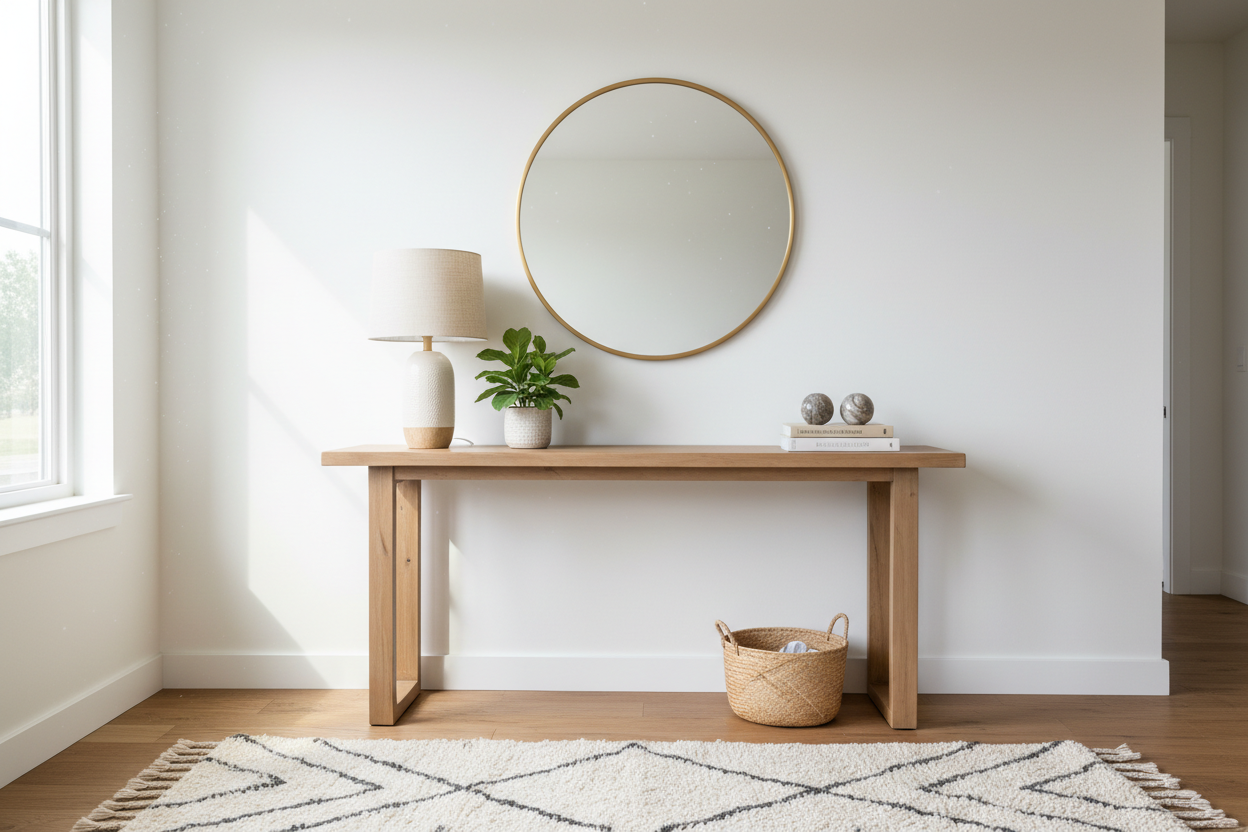
Your entryway sets the tone for the rest of your home. It creates that crucial first impression for guests and serves as your personal landing zone after a long day. The centerpiece of this often-overlooked space is almost always the console table. A well-chosen console table for hallway areas does double duty: it provides a practical surface for dropping keys and mail while acting as a visual anchor that defines the aesthetic of your home. Whether you are working with a sprawling foyer or a cramped corridor, the right table transforms a pass-through area into a designed room.
My Battle with the "Tunnel" Hallway
I learned the importance of hallway furniture the hard way in my second apartment. The entrance was essentially a long, dark tunnel that felt completely disconnected from the rest of the living space. For months, mail piled up on the floor, and I was constantly losing my keys because I didn't have a designated spot for them. The space felt chaotic and unwelcoming.
I eventually hunted down a narrow, vintage wooden table at a local estate sale. It wasn't expensive, but it had character. Once I placed it against the wall with a small lamp and a ceramic bowl for my keys, the entire energy of the apartment changed. That simple addition turned a dead zone into a functional, welcoming space. It taught me that you don't need a grand foyer to make an entrance; you just need the right piece of furniture to ground the space.
Measuring for the Perfect Fit
Space planning is the most critical step before you even look at finishes or styles. Hallways are high-traffic zones, and a table that protrudes too far can disrupt the flow of movement. Standard hallways usually range between 36 and 48 inches wide. To maintain a comfortable walking path, you generally want to leave at least 30 to 36 inches of clearance.
If your corridor is tight, look for a console table hallway design specifically labeled as "slim" or "narrow depth." These models are often only 10 to 12 inches deep, hugging the wall tightly while still offering enough surface area for decor and essentials. Length is less of a constraint, but visual balance matters. A tiny table on a long wall looks lost, while a massive piece on a short wall feels overwhelming. Aim for a table that covers about two-thirds of the wall length for the most pleasing proportion.
Balancing Style and Functionality
Once you have your measurements, consider what you actually need the table to do. Is it purely decorative, or do you need serious storage? If your household is prone to clutter, a table with drawers is indispensable. Drawers hide the unglamorous reality of daily life—sunglasses, dog leashes, and junk mail—keeping the surface clean for styling.
Open shelving below the tabletop offers a different kind of utility. This is an excellent spot for placing woven baskets or bins. Baskets can hold shoes, umbrellas, or winter accessories, keeping them accessible but out of sight. For a more minimalist approach, a table with simple legs and no lower shelf keeps the sightlines open, which can make a small hallway feel larger and airier.
Material Matters
The material you choose dictates the mood of the entrance. Glass and acrylic tables are fantastic for small or dark spaces because they take up zero visual weight. They disappear into the room, allowing light to pass through, which prevents the hallway from feeling closed in.
Wood brings warmth and texture. A raw, unfinished wood table adds a farmhouse or organic modern vibe, while dark, polished wood leans more traditional or mid-century. Metal tables, often paired with stone or wood tops, offer durability and an industrial edge. If you have high traffic or pets, consider durable materials that can withstand the occasional bump or scratch without losing their appeal.
Finding Value Without Sacrificing Style
Furnishing a home adds up quickly, but the entryway is one area where you can make a big impact with a small investment. You can find hallway tables cheap without them looking low-quality if you know what to look for. The key is avoiding finishes that look obviously fake, like low-resolution laminate wood grain.
Metal and glass options at lower price points often look more expensive than their wood counterparts because the materials are harder to fake. Powder-coated black metal frames are a staple of budget-friendly design that fits seamlessly into modern, industrial, or farmhouse aesthetics.
Another route to affordability is upcycling. A dated table from a thrift store can be revitalized with a coat of matte black paint or by swapping out the hardware. Sometimes, the most unique piece in a home is a budget find that was given a little bit of love and attention.
Styling Your Console Table
A bare table is just furniture; a styled table is design. The "rule of three" is a reliable method for arranging decor. Group three items of varying heights to create visual interest. For example, place a tall table lamp on one side, a medium-sized plant or vase in the middle, and a stack of books or a small tray on the other side.
Lighting is non-negotiable in a hallway. A lamp on the console adds a soft, welcoming glow that overhead lights simply cannot replicate. If you don't have an outlet nearby, battery-operated lamps or sconces are excellent alternatives. Above the table, a large mirror is a classic choice for good reason. It reflects light, making the hallway appear brighter and larger, and allows for a quick appearance check before you head out the door.
Don't forget the space underneath. If your table has high legs, the gap between the floor and the tabletop is prime real estate. A pair of matching ottomans tucked underneath adds texture and provides extra seating for guests when needed. Alternatively, a large, sculptural vase or a vintage trunk can fill the void and ground the arrangement.
Final Thoughts on Entryway Design
Your hallway doesn't have to be a forgotten passage. By selecting the right console table, you claim that space as part of your home's living area. Whether you opt for a sleek glass piece to open up a tight corner or a robust wooden table with drawers to manage the family clutter, the result is a home that feels organized and welcoming the moment you step through the door.
Frequently Asked Questions
What is the standard height for a hallway console table?
Most console tables stand between 30 and 36 inches tall. This height is comfortable for dropping off keys without bending down and aligns visually with the back of most sofas if you decide to repurpose the table in a living room later.
How do I stop my hallway table from wobbling on carpet?
If your table feels unstable on a carpeted runner or rug, use carpet spikes or heavy-duty furniture coasters under the legs. For lightweight tables, anchoring the back of the table to the wall with a small bracket adds safety and stability, especially in high-traffic zones.
Can I use a console table over a radiator?
Yes, this is a great way to disguise a radiator, but you must ensure there is enough clearance for heat to escape to prevent damaging the furniture or creating a fire hazard. Look for tables with an open bottom and avoid solid wood directly touching the heat source; stone or metal tops are generally safer options.

Leave a comment
This site is protected by hCaptcha and the hCaptcha Privacy Policy and Terms of Service apply.