









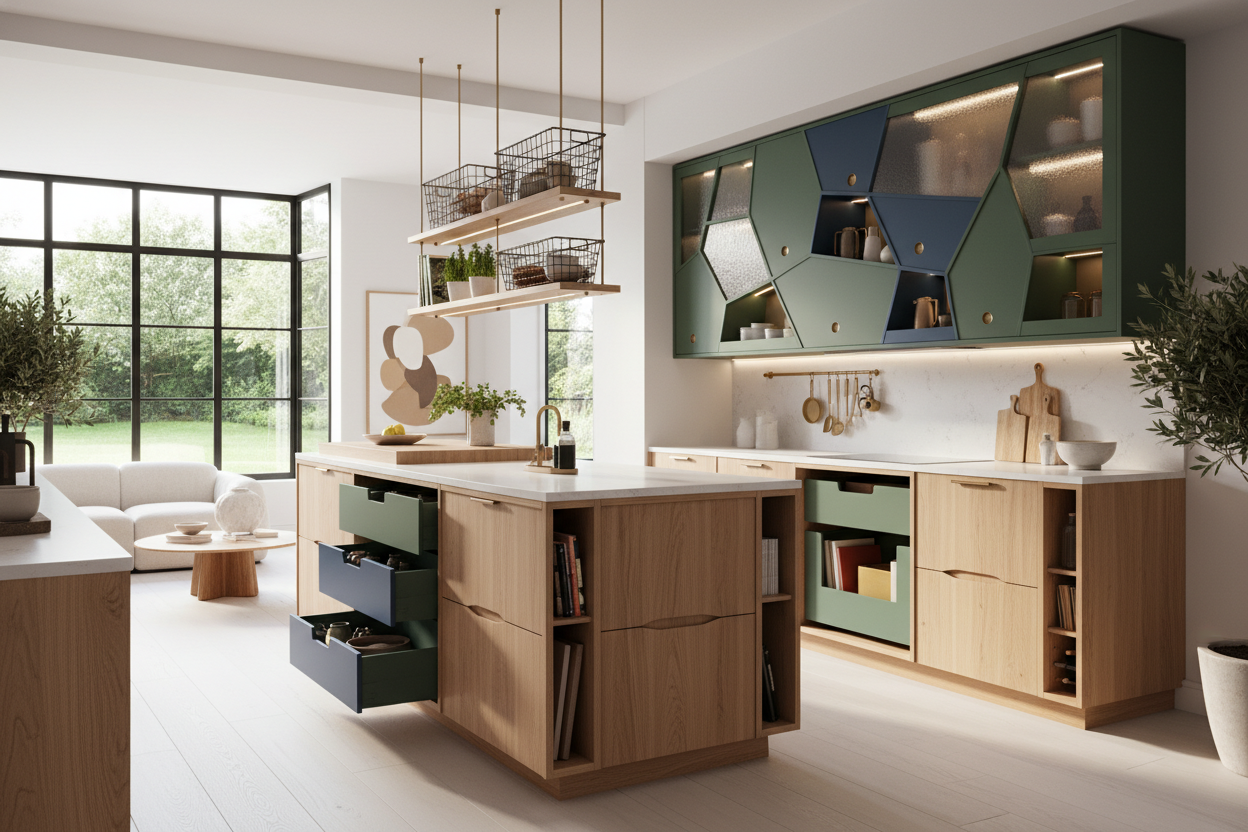
I remember walking into a client's kitchen last year—they'd installed these incredible, bright blue cabinets with glass fronts and gold hardware. They looked straight out of a magazine. But within six months, they were calling me. The glass showed every fingerprint, the blue felt overwhelming at 7 AM, and they were already talking about painting them gray. That's the challenge with unique kitchen cabinets ideas: they need to work for your real morning coffee routine, not just for Instagram.
After furnishing over 200 homes, I've learned that the most successful unique designs marry personality with practicality. Here's what actually works.
Quick Takeaways
- Fun cabinets need durable finishes—think semi-gloss over high-gloss for easier cleaning.
- Hardware is your secret weapon for uniqueness without commitment.
- Always maintain at least 42 inches of clearance between cabinets and islands for workflow.
- Test color samples at different times of day before committing.
Why 'Fun' Kitchen Cabinets Need More Than Just Visual Appeal
When you're scrolling through photos of unique kitchen cabinets design, it's easy to fall in love with that bold color or unconventional shape. But in your actual North American kitchen—where you're prepping meals, unloading groceries, and wiping down surfaces daily—aesthetics are just one piece. I've seen clients choose flat-front cabinets for a sleek look, only to struggle with grease marks showing on the matte finish. Or opt for open shelving that looks airy, but collects dust on every dish.
The cabinets that last are the ones built for your lifestyle. That means considering the cabinet box material—I recommend plywood over particleboard for durability, especially in humid climates. It means thinking about door overlay: full-overlay doors (where the door covers almost the entire frame) give a modern, seamless look, but require precise 1/8-inch gaps to prevent sticking. And it means choosing finishes that can handle splashes. A client once chose a beautiful chalky blue paint, but without a protective topcoat, it stained from tomato sauce within weeks.
For more on this balance, see my thoughts on Unique Kitchen Cabinets — What Actually Makes Them Work.
5 Unique Kitchen Cabinets Design Approaches That Actually Work
So how do you create unique cupboards that you won't regret? Here are five approaches I've used successfully.
First, mix materials. Instead of all-wood cabinets, try incorporating a section with metal mesh fronts for ventilation—ideal for a pantry area. I recently used this in a kitchen where we needed airflow for potatoes and onions. The mesh panels were framed in oak, creating visual interest without looking out of place.
Second, play with proportions. Standard upper cabinets are 12 inches deep. But in a kitchen with high ceilings, we installed 15-inch-deep uppers on one wall, creating a dramatic, library-like effect. We kept them at the same 18-inch height above the counter for functionality, but the extra depth made them feel custom.
Third, consider two-toned cabinets. Instead of painting all cabinets one bold color, paint the uppers a soft white (like Benjamin Moore's Simply White) and the lowers a deep navy. This grounds the space while keeping it light above. Ensure the colors share the same undertone—cool whites with cool navies, warm whites with warm greens.
Fourth, add functional details. I designed a baking station with a cabinet that had a pull-out marble slab for rolling dough. The slab was 24 inches wide and 30 inches deep—big enough for pie crusts but still storable. It looked unique and served a real purpose.
Fifth, use lighting intentionally. Installing LED strip lighting inside glass-front cabinets transforms them at night. Use 2700K temperature for warmth. For more on implementing these ideas, check out Unique Cabinets for Kitchen — How to Actually Make Them Work.
The Hardware That Makes Unique Cupboards Feel Intentional
Hardware is where you can inject personality without a full remodel. I tell clients to think of knobs and pulls as jewelry for their cabinets. For fun kitchen cabinets, skip the standard bin pulls and consider something unexpected. I used leather-wrapped pulls on Shaker-style cabinets recently—the contrast of rustic leather against clean lines was stunning.
Scale matters. For larger drawers (over 24 inches wide), use two pulls or a longer, single pull that's at least 1/3 the width of the drawer. For upper cabinets, I prefer knobs—they're easier to grip when you're reaching up. And don't forget hinges. Exposed hinges in a black finish can give cabinets an industrial feel, while concealed soft-close hinges maintain a minimalist look.
My rule: invest in solid metal hardware. Zinc alloy or solid brass will last decades, while cheaper materials chip and tarnish. I recently replaced a client's plastic knobs with ceramic ones—just that change made their basic cabinets feel custom.
Color and Finish Strategies for Fun Kitchen Cabinets
Color is the quickest way to create unique kitchen cabinets, but it's also where people make costly mistakes. I always recommend testing large samples (at least 12x12 inches) on the actual cabinet material. Paint looks different on MDF versus real wood.
For longevity, consider these combinations: deep green lowers with natural wood uppers, or light gray cabinets with a contrasting island in terracotta. If you're nervous about color, start with the island only—it's easier to repaint later. For finishes, I lean toward satin or semi-gloss. High-gloss shows every imperfection, while matte is hard to clean. A satin finish with 35-40% sheen gives richness without being unforgiving.
One client wanted purple cabinets. Instead of painting them all purple, we used a purple lacquer on the interior of glass-front cabinets only. From the outside, you saw hints of color when the light hit, but it wasn't overwhelming. That's the key—unique doesn't have to mean all-over bold.
How to Balance Unique Kitchen Cabinets with Practical Storage
No matter how beautiful your cabinets are, if they don't store your blender and pasta pots, you'll be frustrated. I design with storage zones: keep everyday dishes near the dishwasher, pots near the stove, and pantry items in deep drawers or pull-outs.
For unique layouts, storage becomes even more important. If you're doing asymmetrical cabinets or open shelving, compensate with smart storage elsewhere. In one kitchen with floating shelves instead of uppers, we installed a tall pantry cabinet with full-extension pull-outs. Each shelf was 16 inches deep—enough for cereal boxes—and on smooth glides that could hold 100 pounds.
Corner cabinets are notoriously wasteful. Instead of a lazy Susan (which often leaves dead space), consider a Corner Kitchen Pantry Cabinet Set with pull-out trays. These systems use the full depth of the corner and make everything accessible.
Remember standard dimensions: base cabinets are typically 24 inches deep, uppers 12 inches. If you deviate, plan accordingly. We once designed 15-inch-deep base cabinets for a baker who needed space for sheet pans. We paired them with standard-depth uppers to avoid the kitchen feeling too heavy.
Integrating Unique Cabinets with Your Kitchen's Overall Flow
Your cabinets don't exist in isolation. They need to work with your island, countertops, and appliances. I always start with the workflow: the classic triangle between sink, stove, and refrigerator should have legs between 4 and 9 feet. Your unique cabinets shouldn't disrupt this.
If you're doing a bold cabinet color, keep the countertop neutral. Quartzite in white or light gray lets the cabinets shine. And ensure proper clearances: at least 15 inches of counter space on either side of the stove, and 42 inches of walkway between cabinets and island.
Islands are a great place to contrast with your main cabinets. If your perimeter cabinets are a calm blue, make the island a warm wood tone. I recently used a Kitchen Island With Glass Top with walnut base cabinets—the glass top kept the space feeling open, while the walnut added richness. For more island ideas, browse the Kitchen Islands Collection.
Finally, consider sight lines. Stand at the kitchen entrance and look at your cabinet layout. Do the heights create a pleasing rhythm? We often vary cabinet heights—some going to the ceiling, others stopping at 84 inches—to create visual interest without chaos.
Personal Experience: When Unique Went Wrong
Early in my career, I designed a kitchen with cabinets painted a vibrant yellow. The clients loved it initially. But within a year, they were tired of the brightness. The yellow reflected oddly on their stainless steel appliances, and it clashed with every tablecloth they owned. We ended up repainting them a soft gray-green. The lesson? Test colors in all lights—morning, noon, and under artificial lighting at night. And remember that trends fade; choose something you can live with long-term.
FAQ
How much do unique kitchen cabinets cost compared to standard ones?
Custom cabinets typically cost 20-40% more than stock ones. But you can achieve uniqueness without full custom. Semi-custom lines offer modifications like different door styles or sizes for 10-20% more. Hardware and paint are affordable ways to customize stock cabinets.
Will unique cabinets hurt my home's resale value?
Not if they're well-executed. Buyers appreciate character, but they also want functionality. Avoid overly trendy colors or impractical layouts. Two-toned cabinets or interesting hardware generally add value because they make the kitchen memorable.
What's the most common mistake with fun kitchen cabinets?
Choosing style over storage. I've seen clients remove too many upper cabinets for open shelves, then struggle with where to put everyday items. Always maintain adequate closed storage—at least 60% of your total cabinet space should be behind doors.
Can I mix cabinet styles in one kitchen?
Absolutely. Mix Shaker with slab doors, or wood with painted finishes. The key is maintaining a common element—like all having the same hardware finish, or all sharing a similar profile depth. Limit yourself to two or three styles maximum to avoid visual chaos.

Leave a comment
This site is protected by hCaptcha and the hCaptcha Privacy Policy and Terms of Service apply.