










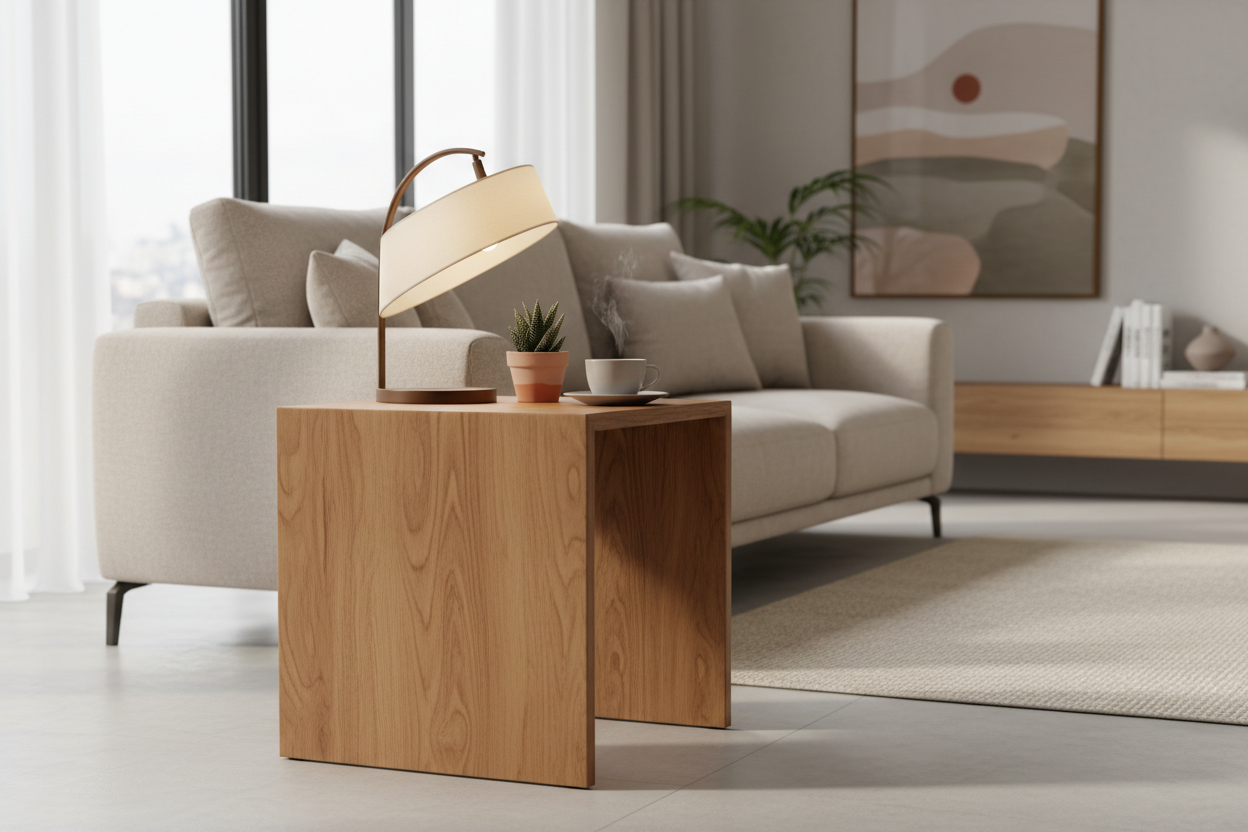
We often spend weeks agonizing over the perfect sofa or the right shade of paint for the walls, yet the furniture that actually holds our coffee cups gets treated as an afterthought. This is a design tragedy. The right surface next to your favorite chair isn't just a landing pad for a remote control; it anchors the room. Wood side tables, in particular, bring an organic warmth that metal or glass simply cannot replicate. They ground a space, adding texture and a sense of history even if the piece is brand new.
Choosing the right piece goes beyond just picking a color. It is about understanding how grain, scale, and shape interact with the rest of your furniture. Whether you are working with a sprawling sectional or a compact apartment loveseat, integrating natural materials elevates the aesthetic immediately. Let’s look at how to select and style these essential pieces without getting overwhelmed by the options.
The Enduring Appeal of Timber
There is a reason we keep coming back to timber. Unlike acrylic or industrial steel, wood carries life. It changes over time, developing a patina that tells the story of the home. When you introduce small wood end tables into a living area, you are adding a layer of visual weight that balances out softer textiles like velvet cushions or wool rugs.
I learned this lesson the hard way a few years ago. I was determined to furnish my first real apartment with sleek, glass-and-chrome furniture because I thought it looked "modern." Within a month, the room felt sterile, almost like a dentist's waiting room. It lacked soul. I swapped out a cold metal stand for a vintage oak piece I found at a flea market—a sturdy, slightly scratched wood small end table with turned legs. The difference was instant. The room suddenly felt lived-in and inviting. That little table bridged the gap between my modern sofa and the traditional rug, proving that wood is the ultimate neutral.
Sizing It Up: Scale and Proportion
One of the most common mistakes homeowners make is ignoring scale. A table that is too high makes reaching for your drink awkward, while one that is too low looks like a dollhouse prop. The general rule of thumb is to keep the tabletop within two inches of the sofa arm's height. However, when dealing with a small end table wood construction allows for some flexibility because the material itself is substantial.
If you are tight on square footage, visual weight becomes just as important as physical dimensions. A blocky, solid trunk might physically fit in a corner, but it will make a cramped room feel smaller. In these instances, look for a wood small accent table with legs rather than a solid base. The open space underneath allows light to pass through, tricking the eye into seeing more floor space. Spindle legs or mid-century modern tapered legs are excellent choices for maintaining an airy feel while still enjoying the richness of timber.
Mixing Wood Tones Without the Chaos
A frequent point of anxiety is matching wood stains. Do your side tables need to match the coffee table? Absolutely not. In fact, buying a matching set often makes a room look like a catalog page rather than a curated home. The secret to mixing small wooden side tables for living room setups is to look at the undertones.
Woods generally fall into warm (red/orange/yellow) or cool (gray/ash) categories. You can mix a dark walnut with a lighter oak as long as they share a similar warmth. If you have honey-colored floors, a deep espresso table can provide a stunning contrast. The goal is coordination, not uniformity. If you are nervous about clashing, try to keep the grain patterns somewhat consistent. A rustic, knotty pine might fight with a sleek, lacquered mahogany, not because of the color, but because the textures are at war.
Functionality Meets Form
Beyond aesthetics, we have to talk about how these tables actually work. Since we are specifically discussing wood small end tables, surface area is at a premium. You likely don't have room for a lamp, a plant, a stack of books, and a coaster. You have to prioritize.
If you need storage, look for designs with a single drawer. It is the perfect hiding spot for charging cables or coasters when they aren't in use. If the table is purely decorative, a round pedestal table can break up the rigid lines of a square room. I currently use a tiny teak stool as a side table in my reading nook. It is barely twelve inches wide, just enough for a mug and a phone, but its sculptural shape makes it a piece of art in its own right.
Maintenance and Care for Longevity
Wood is durable, but it isn't invincible. The biggest enemy of your new furniture is moisture. We have all seen the dreaded white rings left by a sweating glass. While some modern finishes are more resistant, it is always safer to use coasters. If you do end up with a water ring on a wood small end table, you can sometimes draw the moisture out using a hairdryer on a low setting or by applying a little mayonnaise (an old carpenter's trick) to displace the water, though results vary based on the finish.
Sunlight is another factor. If your table sits directly under a window, UV rays will lighten or darken the wood over time. To avoid uneven fading, rotate the accessories on the table occasionally so you don't end up with a dark patch where a lamp base sat for three years. Dusting regularly with a microfiber cloth is usually enough for day-to-day care; avoid heavy wax sprays that build up a sticky residue over time.
Ultimately, selecting the right furniture is about finding pieces that serve your life while making you smile when you walk in the room. Whether it is a sleek walnut tripod or a rustic reclaimed cube, the right wooden accent anchors your living space in comfort.
Frequently Asked Questions
How tall should a side table be compared to the sofa?
Ideally, the table surface should be level with or just slightly lower than the arm of your sofa or chair. A range of about two inches above or below the arm height is acceptable, but anything lower makes it hard to reach your drink, and anything significantly higher can feel imposing and awkward.
Can I mix different types of wood in the same room?
Yes, mixing wood tones creates a layered, designer look. To do this successfully, try to keep the undertones (warm vs. cool) consistent across the different pieces. Alternatively, use high contrast, such as pairing very light maple with dark ebony, to make the difference intentional rather than accidental.
What is the difference between solid wood and veneer side tables?
Solid wood is made entirely of natural lumber, making it durable and refinishable, but it can be susceptible to warping in humidity. Veneer features a thin layer of high-quality wood glued over a composite base; it is often more stable and affordable, but it cannot be sanded down or refinished as easily as solid wood.

Leave a comment
This site is protected by hCaptcha and the hCaptcha Privacy Policy and Terms of Service apply.