












We have all experienced the aesthetic fatigue of the traditional corporate office: the harsh overhead fluorescent lighting, the generic commercial-grade carpet, and the beige laminate surfaces that lack soul. As an interior designer, I approach the debate of why remote work is better not just from a productivity standpoint, but from a spatial and environmental psychology perspective. The argument is simple: when you control your environment, you control your output.
Key Design Factors for Remote Success
If you are wondering is it better to work onsite or remotely essay-style questions, the answer often lies in the physical specifications of the workspace. Here are the core design elements that give the home office the advantage:
- Ergonomic Customization: The ability to choose a chair with the exact lumbar curve and seat depth for your body type, rather than a one-size-fits-all office standard.
- Lighting Control: Swapping high-Kelvin commercial tube lighting for layered, warm ambient and task lighting to reduce eye strain.
- Acoustic Management: Using soft furnishings (rugs, drapes) to dampen sound, rather than relying on ineffective cubicle dividers.
- Visual Textures: Incorporating natural materials like solid walnut or oak to introduce biophilic elements that lower cortisol levels.
The Ergonomic Argument: Is Remote Work Better?
In a commercial setting, procurement departments purchase furniture based on durability and bulk pricing. In your home, you curate based on physiology. Is remote work better for your physical health? Absolutely, provided you invest in the right pieces.
When designing a home office, we move away from the "commercial grade" aesthetic. We focus on task chairs that blend high-performance mesh with residential fabrics—linens or high-grade leathers that breathe. We look at sit-stand desks that feature solid wood tops rather than particle board, offering a tactile grounding experience every time you rest your arms. This level of customization eliminates the micro-stresses on the body that accumulate during an eight-hour shift in a generic cubicle.
Why Is Remote Work Better for Focus?
The open-plan office was a design trend intended to foster collaboration, but it often destroyed focus. Why is remote work better in this regard? It allows for the creation of a "focal point" layout.
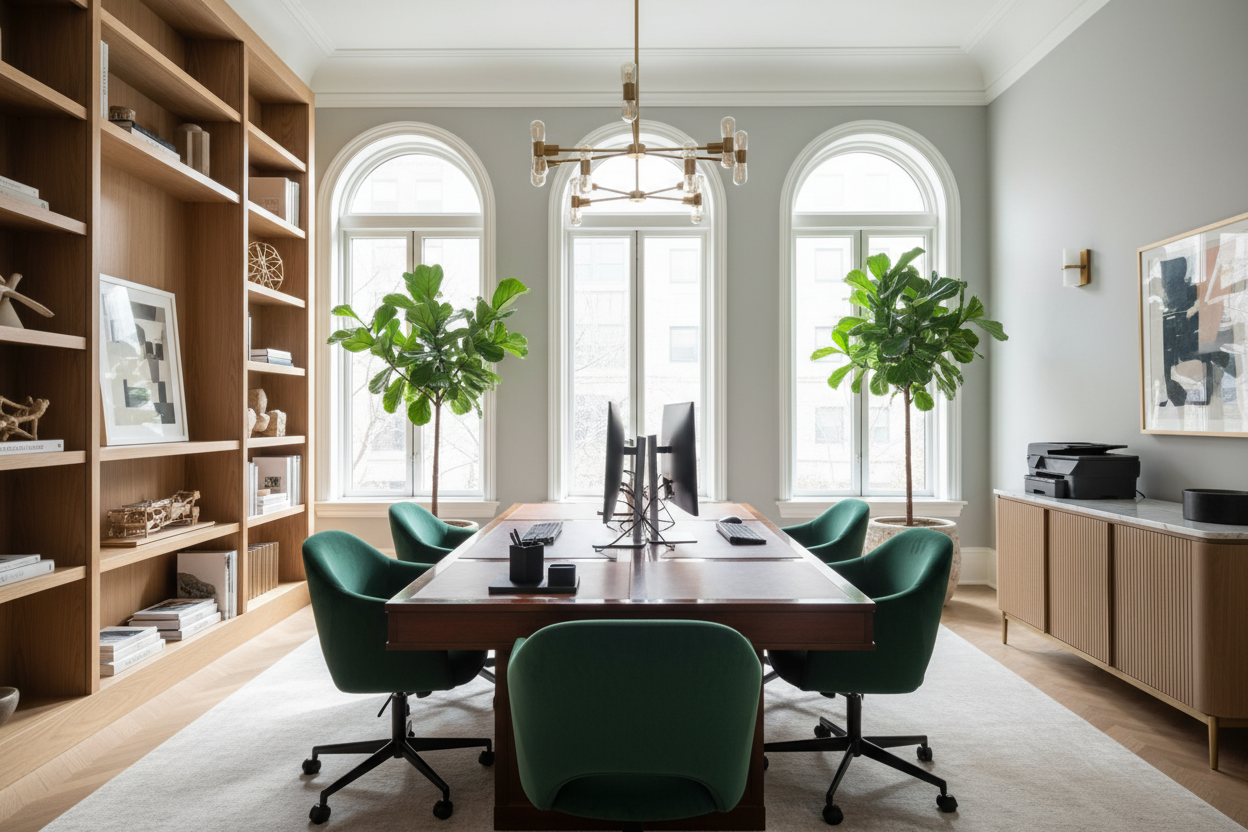
In interior design, we arrange furniture to direct the eye and the mind. At home, you can position your desk to face a window (with proper light filtration) or a piece of art, rather than a colleague's monitor. We can control the "visual noise" of the room. By utilizing closed storage systems—think credenzas with fluted wood doors or sleek matte lacquer finishes—we hide the clutter of technology. This creates a serene visual field that commercial offices, with their exposed wiring and open shelving, rarely achieve.
Materiality and Atmosphere
There is a profound difference between resting your hand on a cold laminate conference table and a warm, oil-finished oak desk. Why working remote is better often comes down to these sensory details. Natural materials age beautifully and develop a patina, creating a sense of permanence and calm. In contrast, commercial materials are designed to resist wear but often feel sterile and temporary. This tactile connection to your workspace grounds you, reducing anxiety and promoting a deeper state of 'flow'.
Why Remote Work Is Better for Companies
From a spatial planning perspective, why remote work is better for companies comes down to overhead and efficiency. When employees curate their own high-performance environments, companies reduce their real estate footprint. Instead of maintaining thousands of square feet of generic office space, the focus shifts to output. A well-designed home office is an efficiency machine; it removes the friction of a commute and the distractions of a bustling floor plan, delivering a higher ROI on human capital.
My Personal Take on why remote work is better
I realized the true power of the home office during a project for a client who was a high-frequency trader. He insisted on working from a downtown high-rise office because he thought he needed the "energy." However, he complained of constant migraines and fatigue.
We transitioned him to a home setup, and the specific detail that changed everything was the lighting temperature. In his corporate office, he sat under 4000K (cool white) lighting all day. At home, I installed smart bulbs set to a circadian rhythm—starting bright and cool, but shifting to a warm 2700K amber glow by 3:00 PM.
He told me later, "I didn't realize how much the harsh glare was draining me until I felt the room 'soften' in the afternoon." That subtle shift, impossible to control in a shared building, completely eliminated his afternoon slump. It wasn't just about working from home; it was about the autonomy to design a space that respected his biology.
Conclusion
Ultimately, the debate isn't just about location; it is about the quality of the environment. Remote work offers the unique opportunity to treat your workspace not as a utility, but as a sanctuary of productivity. By selecting the right materials, controlling the light, and prioritizing ergonomics, you elevate your work life from a daily grind to a curated experience.
Frequently Asked Questions
How much space do I really need for a functional home office?
You don't need a dedicated room. A functional workspace requires a minimum footprint of about 60 inches in width for the desk and 48 inches of depth to allow for chair movement. The key is vertical utilization—using wall-mounted shelving to keep the floor plan open.
What is the most important furniture investment for remote work?
Always prioritize the chair. Look for a "synchro-tilt" mechanism that allows the seat and back to move in a ratio that supports your spine as you recline. No amount of aesthetic styling can compensate for a backache caused by poor ergonomics.
How do I make a home office look professional on video calls?
Focus on your background. Avoid having a door or a messy room behind you. A bookshelf styled with a mix of books and decorative objects (keeping 30% negative space) or a wall with a matte paint finish creates a sophisticated, distraction-free backdrop.


Leave a comment
This site is protected by hCaptcha and the hCaptcha Privacy Policy and Terms of Service apply.