










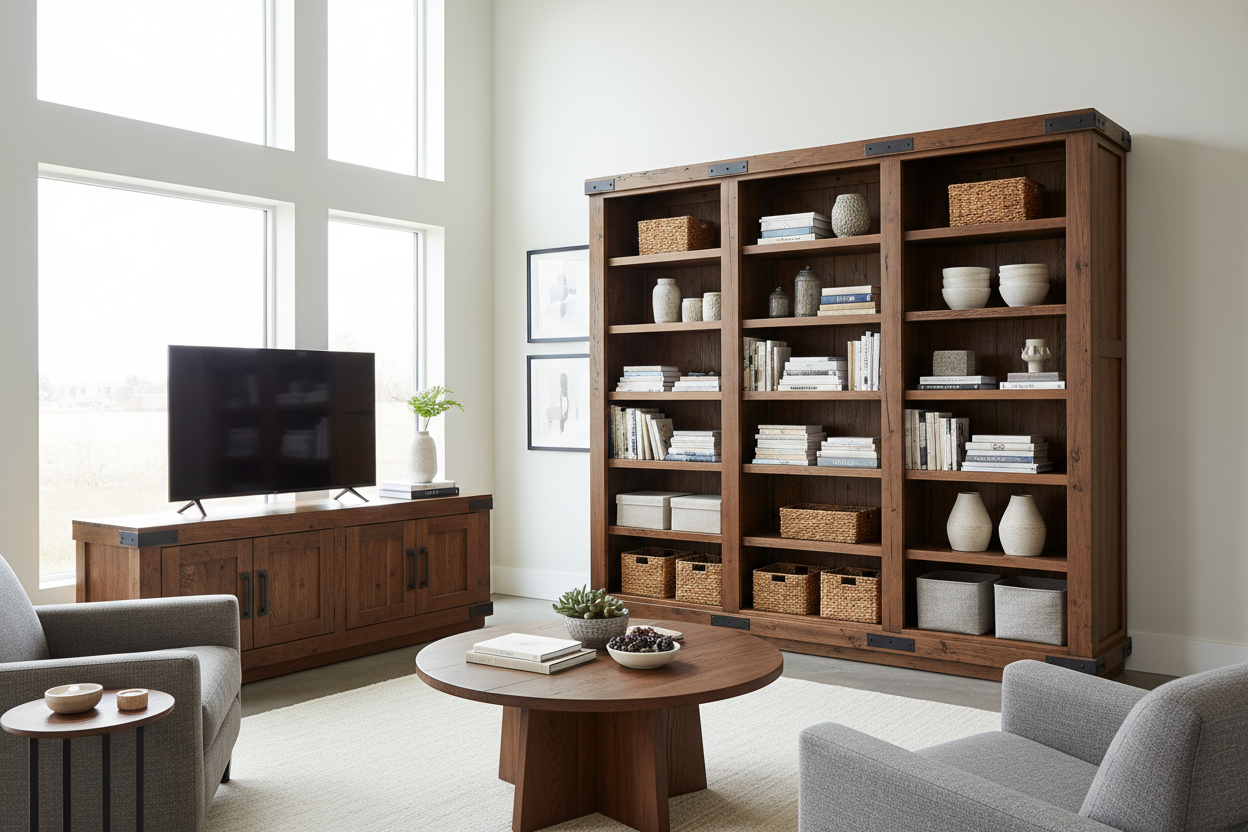
I spent years thinking a forty-dollar bookshelf was a bargain. Then I heard a sickening 'crack' at three in the morning. My entire collection of vintage cookbooks and heavy stoneware bowls had finally won the war against the particleboard. It turns out that a heavy duty wood storage cabinet isn't just a luxury; it's a necessity for anyone who actually owns things that weigh more than a t-shirt.
- MDF is for light linens; solid wood is for real gear.
- Check the shelf thickness—anything under 3/4 inch will eventually bow.
- Look for reinforced joinery like dovetails or metal brackets.
- Hide the chaos behind solid doors for a cleaner, calmer room.
The Day My Favorite Ceramics Literally Hit the Floor
We've all been there. You buy a piece of flat-pack furniture because it looks 'good enough' in the photos. You load it up, and within six months, you notice that dreaded middle sag. I tried to convince myself that a manufactured wood armoire could handle my obsession with heavy Dutch ovens and ceramic platters. I was wrong.
Those pieces are engineered for light loads—think sweaters, extra pillows, maybe some guest towels. When you ask them to hold thirty pounds of stoneware, the glue starts to fail and the shelves turn into U-shapes. Watching my favorite serving piece shatter because a plastic peg snapped was the wake-up call I needed. If it's heavy, it needs a real frame.
What Makes a Heavy Duty Wood Cabinet Actually 'Heavy Duty'?
Don't let the marketing fool you. A 'heavy duty wood cabinet' shouldn't just be heavy to move; it needs to be built to stay still. I always look for kiln-dried hardwoods like oak, acacia, or mango wood. These materials don't just look better; they have the structural integrity to hold weight without screaming for help.
The secret is in the details you usually ignore. Are the shelves adjustable? If so, are the pins metal or plastic? Are the back panels real wood or that flimsy cardboard you staple on? When you choose the perfect wood storage cabinet, you're looking for a piece that feels dense. If you can push the side of the cabinet and it wobbles, walk away. You want something that feels like it’s anchored to the earth.
Hiding the 'Ugly' Stuff: Bringing Garage-Level Storage Inside
I used to have one of those industrial wire racks in my dining area. It held my stand mixer and my cast iron pans, but it looked like I was running a commercial kitchen out of a studio apartment. It was eyesore central. The relief of moving that heavy, awkward gear into a solid wood modern sideboard was instant.
A sideboard with a high weight capacity lets you store the 'ugly' essentials—the toolbox, the oversized craft bins, the 20-pound bags of flour—behind beautiful, grain-rich doors. You get the strength of a garage shelf with the aesthetics of a high-end living room. It's the ultimate way to de-clutter without actually getting rid of your stuff.
How to Style a Bulky Wood Piece So It Doesn't Look Like a Shed
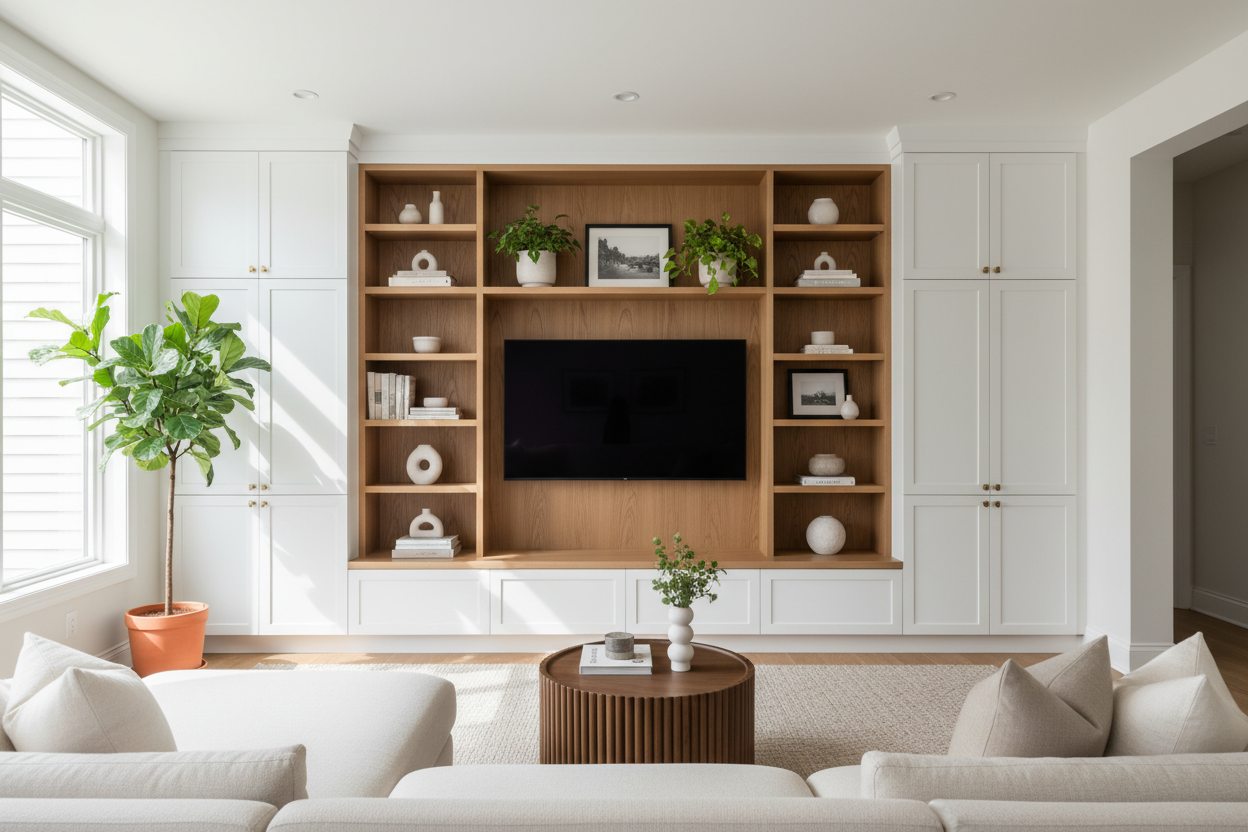
When you bring in a massive, solid wood piece, it can feel like a monolith that swallows the room. My trick is to balance that visual weight. If you have a dark, heavy cabinet on one wall, don't just leave it there to loom. Soften it with a tall plant next to it or a bright piece of art hanging above it.
I also love mixing textures. If your storage is a solid block of wood, try pairing it with a small wood cabinet with glass doors nearby. The glass adds a sense of 'air' and transparency that prevents the room from feeling like a warehouse. It’s all about that push and pull between solid and light.
The Final Verdict: Is the Investment Worth the Price Tag?
I used to be the person who would buy a cheap $120 cabinet every three years. After the third one broke, I realized I’d spent almost $400 on garbage. Investing in a solid, heavy-duty piece once is cheaper in the long run. Plus, you don't have to deal with the heartbreak of a shelf collapsing on your valuables.
Measure your space twice, check the weight ratings, and buy the piece that’s going to outlast your current apartment. Your ceramics—and your sanity—will thank you.
How much weight can a solid wood shelf actually hold?
Typically, a 3/4-inch thick solid wood shelf that is 30 inches wide can hold about 50 to 75 pounds without significant bowing. If it's reinforced or thicker, that number goes up significantly.
What is the best wood for a heavy storage cabinet?
Oak, Hickory, and Maple are the gold standards for strength. Acacia is also a fantastic, slightly more affordable option that is incredibly dense and durable.
Do I need to anchor a heavy wood cabinet to the wall?
Yes, absolutely. Even if it feels stable, the weight of the items inside changes the center of gravity. Always use the anti-tip kit, especially if you have kids or pets.


Leave a comment
This site is protected by hCaptcha and the hCaptcha Privacy Policy and Terms of Service apply.