










I stared at the contractor's estimate for three days. $15,000 for some built-in mahogany shelves in a basement room the size of a walk-in closet? I love a good Cabernet, but I do not fifteen-thousand-dollars-worth-of-shelving love it. That was the moment I realized I didn't need a contractor; I needed a smarter strategy with wine cellar furniture.
The goal was simple: make a 10x10 spare room feel like a private estate tasting room without the custom millwork price tag. By using high-quality freestanding pieces and a few installation tricks, I saved over $12,000 and ended up with a space that looks far more expensive than the sum of its parts.
- Weight capacity is the only spec that actually matters for bottle safety.
- Modular units create a built-in look if you align them correctly.
- Removing baseboards allows furniture to sit flush against the wall.
- Wall anchoring is mandatory to prevent a 400-pound disaster.
The $15,000 Quote That Made Me Rethink Everything
The quote included things I didn't even know I needed, like integrated LED channels and crown molding that cost more than my first car. The contractor told me that because the walls weren't perfectly plumb, custom was the only way to go. I almost fell for it. I wanted that moody, sophisticated vibe where you can sit with a glass and feel like you've left the suburbs behind for a night in Bordeaux.
But after the initial sticker shock wore off, I started measuring. I realized that most custom rooms are just boxes against walls. If I could find freestanding pieces with the right scale, I could fill the space myself. I traded the idea of permanent cabinets for the flexibility of modular wine room furniture. It gave me the freedom to move things around if I realized my collection of Magnums was outgrowing my standard bottle racks.
I spent hours comparing wood species and weight ratings. I wasn't just looking for a place to put bottles; I was looking for furniture that could handle the structural load of a small library. Most people underestimate how heavy wine is. Once you start stacking cases, you're dealing with serious structural pressure.
What Actually Qualifies as Proper Wine Cellar Furniture?
Here is where most people mess up: they buy a cute bookshelf from a big-box store and think it can hold their collection. A standard bottle of wine weighs about 3 pounds. If you have a rack that holds 100 bottles, that is 300 pounds of glass and liquid sitting on a few pegs. Most cheap MDF furniture is rated for about 50 pounds per shelf before it starts to sag or, worse, the cam-locks snap.
Real wine room furniture is built differently. I looked for solid hardwoods like mahogany or kiln-dried pine, or heavy-gauge steel. You want pieces specifically designed for the neck-out or label-view orientation. I avoided anything with those flimsy cardboard backings that you nail on with tiny tacks. If it wobbles when you nudge it in the showroom, it will fail in your cellar.
I chose units with thick horizontal supports and reinforced joints. I also looked for adjustable feet. Since basement floors are rarely level, having the ability to micro-adjust the height of each corner is the difference between a professional-looking row and a jagged, amateur mess. If your furniture doesn't have leveling feet, you'll be stuck using folded-up cardboard shims like a college student.
How I Pieced Together My Wine Room Furniture
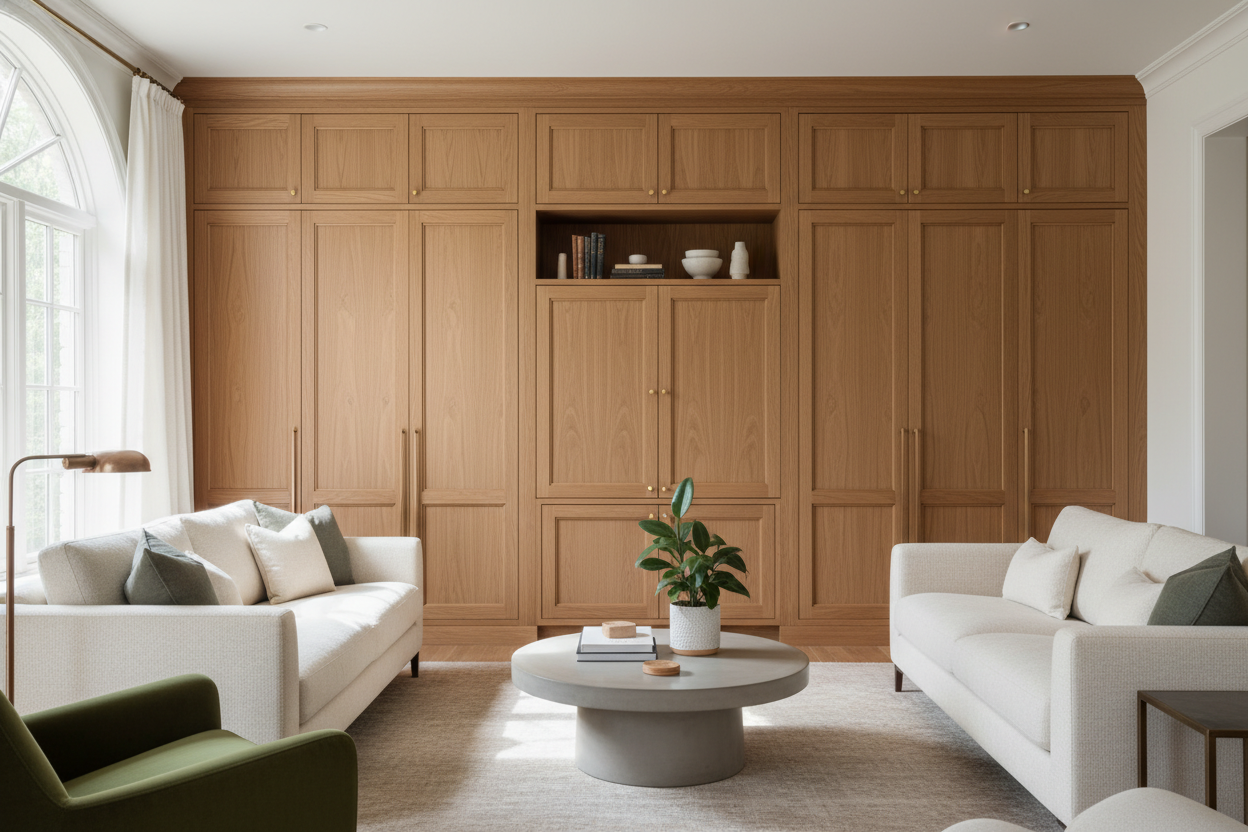
I didn't just buy one big rack and call it a day. I treated the room like a puzzle. I started with two tall, 7-foot modular racks to act as anchor pieces on the main wall. Between them, I placed a lower credenza with a solid stone top. This created a natural break in the visual height and gave me a surface for pouring and displaying open bottles. It looks like a single, massive unit, but it’s actually three separate pieces of furniture.
In the center of the room, I added a counter-height tasting table. I went with 36 inches high because it’s the perfect height to lean against while talking. Anything lower feels like a dining table; anything higher feels like a bar. This central piece anchors the room and prevents it from looking like a storage warehouse.
By matching the wood stain across the different pieces, the room felt cohesive. I skipped the cheap cherry-stained finishes that look like plastic and went with a deep, matte walnut. It absorbs the light instead of reflecting it, which helps create that moody cellar atmosphere I was after. It’s all about the symmetry; if you flank a central piece with two taller ones, your brain registers it as a single custom installation.
The Baseboard Trick for a Faux Built-In Look
This is the best $0 DIY tip I can give you: take your baseboards off. Most freestanding furniture has a gap at the back because of the trim at the bottom of your walls. This 1-inch gap is a dead giveaway that the piece isn't custom. I pried the baseboards off the back wall so my racks could sit 100% flush against the drywall.
Once the furniture was in place, I reinstalled the baseboards butted up against the sides of the racks. This makes the furniture look like it was built into the wall. If you're feeling fancy, you can even add a small piece of crown molding across the top of the units to bridge the gap to the ceiling. It’s a two-hour project that adds thousands in perceived value.
Maximizing the Room's Dead Zones
Every room has that one awkward corner or narrow strip of wall that seems useless. In my case, it was a 14-inch strip behind the door. Instead of leaving it empty, I looked for a slim furniture solution to house my glassware. It’s just wide enough for three rows of stems and a decanter drying rack, turning a dead zone into a dedicated glass station.
I also utilized the vertical space above the door for a single floating shelf that holds my oversized Magnums. Don't be afraid to mix and match smaller secondary stations. A dedicated spot for corkscrews, napkins, and a small humidor makes the room feel like a functional cellar rather than just a storage closet. I even tucked a small leather stool in the corner for when I'm cataloging bottles and need to take a load off.
Why Anchoring Is Non-Negotiable
Physics doesn't care about your floor plan. A tall wine rack is incredibly top-heavy once you start filling those upper rows. I’ve seen horror stories of entire collections shattered on the floor because a rack tipped during a minor tremor or just because the carpet settled. Every single piece of furniture in my room is bolted into a stud using heavy-duty L-brackets.
It’s the same level of security I required for the furniture piece that saved my awkward living room. If you have carpet, this is even more critical because the padding creates an unstable, squishy base. I actually cut small squares out of the carpet so the furniture feet could sit directly on the subfloor. It sounds extreme, but when you're standing next to 400 pounds of glass, you want to know it's not going anywhere.
FAQ
Does wine cellar furniture need to be climate controlled?
The furniture itself doesn't, but the room should be. If you aren't installing a cooling unit, keep your furniture in a basement or a room with no windows to prevent temperature swings and UV light from ruining your wine. Wood furniture can also warp if the humidity is too high, so keep it around 50-70%.
Can I use metal racks instead of wood?
Absolutely. Metal is often more space-efficient and offers a modern look. Just ensure the metal is powder-coated to prevent rust if your cellar has high humidity. I mixed in some metal wall-mounted racks for a contemporary touch.
How do I hide the gaps between modular pieces?
I used a simple wood-filler stick in a matching stain to bridge the tiny seams where two racks met. You can also use black felt strips between the units to absorb shadows. From three feet away, you can't even see the join line.


Leave a comment
This site is protected by hCaptcha and the hCaptcha Privacy Policy and Terms of Service apply.