










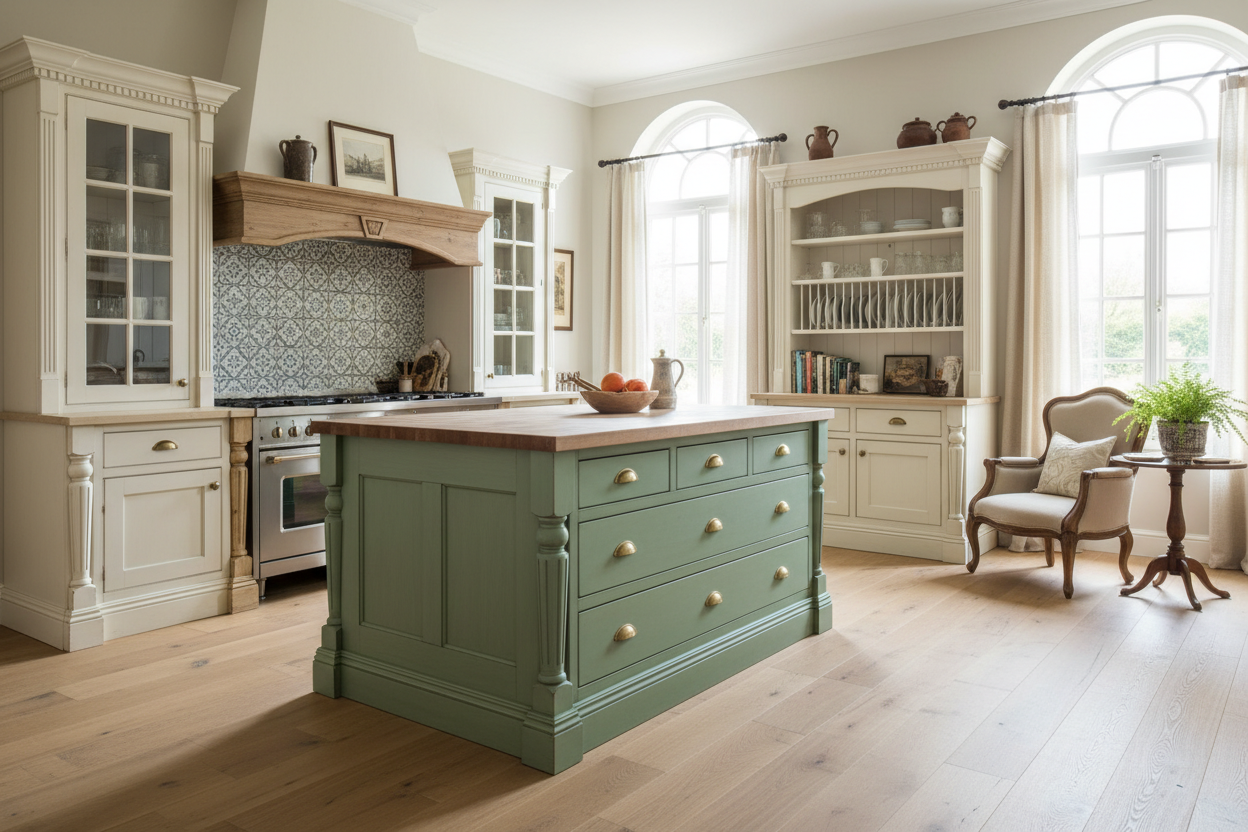
You know that feeling when you walk into a kitchen and it just feels like a room, not a row of cabinets? I've worked with over 200 homeowners who want exactly that—a kitchen where the storage blends in like the beautiful furniture in their living room. Many worry about getting it wrong, ending up with something that looks mismatched or overly fussy. Let's talk about what actually works.
Quick Takeaways
- Start with furniture proportions: think 36-inch tall base cabinets (standard) versus 42-inch tall furniture-style bases that feel more substantial.
- Choose inset cabinet doors that sit flush with the frame, like a traditional armoire, rather than overlay doors.
- Select hardware that feels like jewelry: 6-inch to 8-inch pulls in brass or unlacquered bronze add heft.
- Incorporate legs or bun feet on islands and base cabinets—even a simple 4-inch tapered leg changes everything.
- Use paint or stain consistently; if your dining table is walnut, consider a walnut stain on the island.
Why Furniture-Style Cabinets Transform Your Kitchen
When cabinets look like furniture, they stop shouting 'kitchen' and start whispering 'home.' I've seen it in my clients' faces—that moment when a kitchen feels warm and connected to the rest of the house, not like a separate, utilitarian zone. In North American homes, where open floor plans dominate, this continuity is crucial. Furniture-style cabinets create visual flow. They add character through details like moldings and paneling that standard flat-front cabinets lack. Psychologically, they make a kitchen feel more inviting and lived-in, a place for gathering, not just cooking. For more on the emotional impact, I often point clients to our article on Kitchen Cabinets Furniture — What Actually Makes Them Feel Like Home.
Design Elements That Make Cabinets Look Like Furniture
The magic is in the details. First, panel styles: Shaker is a classic, but for a true furniture feel, look at raised panel or beadboard inset doors. The depth and shadow lines matter. Molding is non-negotiable. Add a crown molding at the top—at least 3 inches tall—and a baseboard or toe kick molding at the bottom. This frames the cabinet like a piece of furniture. Finish choices should be intentional. I recommend a satin or matte finish over high-gloss; it feels richer. For paint, consider colors you'd see on an antique dresser: deep greens, navy blues, or creamy whites. Proportions are key. Standard upper cabinets are 12 inches deep; furniture-style pieces might be 14 inches deep to hold display items, creating a breakfront appearance.
Hardware: The Jewelry of Your Cabinets
This is where many projects go astray. Hardware should feel substantial. For pulls, I specify 6-inch to 8-inch lengths for drawers and 4-inch to 5-inch for doors. Avoid tiny knobs on large panels. Materials matter: solid brass, unlacquered bronze (which patinas over time), or even porcelain for a vintage touch. I avoid overly modern, thin bar pulls unless the home is very contemporary. Hinges should be concealed (European) or decorative (butterfly hinges) if visible, never standard exposed hinges. Think of it like selecting drawer pulls for a fine chest—they need weight and presence.
Integrating Storage Without Sacrificing Style
You need storage, but it shouldn't look like a warehouse. I use interior organizers like pull-out trays and dividers, but keep the exterior clean. For example, a pantry cabinet can look like a freestanding armoire if you use full-height doors with panel details. Incorporate glass-front cabinets for upper sections—not all, but one or two to break the monotony and display beautiful dishes. For deeper insights on making storage work beautifully, see Furniture for Kitchen Cabinets — What Actually Makes Them Work Beyond Storage.
Real Kitchen Examples That Nailed the Look
In a suburban colonial I worked on, we used painted inset cabinets with a 4-inch crown molding and bun feet on the island. The island was 42 inches tall with a 3-inch thick butcher block top—it looked like a massive farmhouse table. In an urban loft, we opted for flat-panel walnut cabinets with minimal hardware (just subtle finger pulls) and a floating shelf above, creating a mid-century modern sideboard effect. The key is matching the style to the home's architecture. A piece like the 47 8 W Kitchen Island With Glass Top And Light can complement this look if your style is more transitional, adding a furniture-like centerpiece.
Common Mistakes to Avoid
I've seen homeowners mix too many styles—ornate Victorian legs with ultra-modern slab doors. Pick one furniture style (e.g., farmhouse, mid-century, traditional) and stick to it. Another error is proportion: putting massive crown molding on low ceilings (8 feet or less) overwhelms the space. Keep moldings proportionate to ceiling height. Finish mismatches are common: a cool gray cabinet next to warm oak floors creates discord. Bring finish samples home and look at them in your lighting. Hardware missteps include using pulls that are too small or placing them incorrectly—center pulls on drawers, not too high or low.
Your Action Plan for Furniture-Style Cabinets
Start by measuring your space. Note ceiling height, wall lengths, and existing appliances. Budget realistically: custom inset cabinets cost 20-30% more than standard, but semi-custom lines now offer good options. Timeline: from design to installation, allow 8-12 weeks. I recommend consulting a designer early—we can help you avoid costly errors. For cabinet sets, consider pieces like the 40 Corner Kitchen Pantry Cabinet Set which can be customized with moldings. And browse complementary pieces in our Kitchen Islands Collection to complete the look.
Personal Experience: When It Doesn't Go Perfectly
Early in my career, I specified beautiful, heavy solid brass pulls for a client's kitchen. They loved them, but after a few months, the cabinet doors started sagging because the hardware was too heavy for the door construction. We had to reinforce the doors with additional brackets—a fixable but annoying issue. Now, I always check the weight rating of hinges and door strength. The lesson: aesthetics must meet engineering.
FAQ
Can I make my existing cabinets look like furniture? Yes, to an extent. You can add molding to the tops and bottoms, replace doors with inset-style doors (if frame allows), and change hardware. A full refinish helps unify the look.
What's the biggest cost driver? Custom door styles and inset construction. Inset doors require precise framing and adjustment, increasing labor costs.
Do furniture-style cabinets work in small kitchens? Absolutely, but keep details scaled down. Use simpler moldings and avoid overly bulky legs to maintain clear walkways (aim for 36 inches minimum between cabinets).
How do I choose between paint and stain? Paint offers more color flexibility and can hide imperfections in wood. Stain shows wood grain and feels more traditional. Consider your home's overall palette and the wood species available.


Leave a comment
This site is protected by hCaptcha and the hCaptcha Privacy Policy and Terms of Service apply.