










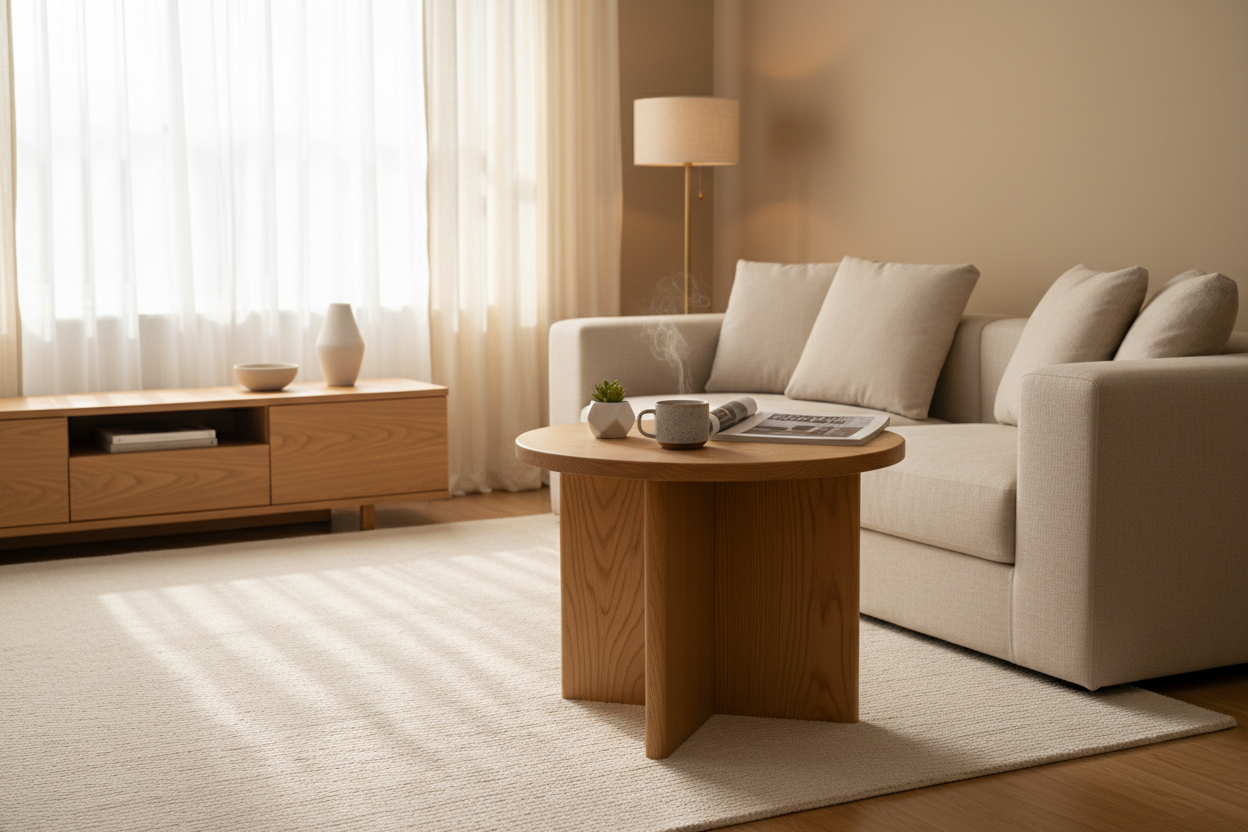
Rectangular furniture often dominates our living spaces. We buy square rugs, L-shaped sectionals, and long media consoles, creating a grid-like atmosphere that can feel rigid and surprisingly unwelcoming. Introducing a round side table wood option into this mix is one of the most effective ways to break up those harsh lines. It adds immediate visual relief and creates a sense of flow that boxy furniture simply cannot achieve. Beyond aesthetics, the lack of sharp corners makes these pieces safer for high-traffic areas and friendlier for shins in the middle of the night.
The Psychology of Curves in Interior Design
There is a reason why organic shapes feel more relaxing. Our eyes naturally follow curves more easily than sharp angles, which require a visual stop-and-start. Placing a round table side by side with a linear sofa creates a dynamic contrast. It acts as a pivot point in the room, encouraging movement around the furniture rather than blocking it.
In smaller apartments or tight reading nooks, a wood circle side table is often a spatial necessity. Square tables have a larger footprint and their corners often protrude into walkways. A circular design shaves off those edges, reclaiming valuable floor space while still providing enough surface area for a lamp, a book, and a cup of coffee. It creates an illusion of more space because the floor is visible around the curved base or legs.
A Personal Lesson on Flow and Function
My appreciation for curved furniture wasn't born out of design school theory, but rather from a cramped city apartment layout. I once insisted on a heavy, square oak end table next to my sofa. It looked sturdy, but it was a nightmare for navigation. Every time guests came over, someone would inevitably clip their hip on the corner while trying to squeeze past the armchair. The room felt blocked off.
I eventually swapped it for a vintage mid-century circle wooden side table with tapered legs. The difference was immediate. The room didn't just look bigger; it felt lighter. The energy of the space changed from an obstacle course to a welcoming lounge. That experience taught me that furniture isn't just about the object itself, but how we move around it. The warmth of the timber aged beautifully over time, proving that natural materials combined with organic shapes are a long-term investment in comfort.
Choosing the Right Timber for Your Aesthetic
Not all wood creates the same vibe. The grain, color, and finish of the timber will dictate whether your room feels rustic, modern, or traditional. When selecting a wooden round side accent table, consider the existing wood tones in your room, but don't feel pressured to match them perfectly.
Walnut and Mahogany
If you are aiming for a mid-century modern or a sophisticated, moody look, dark woods are the way to go. Walnut, with its rich chocolate hues and often straight grain, brings a sense of history and warmth. It pairs exceptionally well with brass hardware and jewel-toned velvet fabrics.
Oak and Ash
For Scandinavian, Japandi, or coastal interiors, lighter woods like white oak or ash are ideal. These woods reflect more light and keep the room feeling airy. They often feature more prominent grain patterns, adding texture without overwhelming the color palette. A light-toned round side table wood piece can serve as a subtle anchor in a neutral room.
Reclaimed and Rough-Hewn
Farmhouse and industrial styles benefit from imperfections. A table made from reclaimed timber, showing knots and saw marks, adds character that factory-made furniture lacks. These pieces tell a story and are generally more forgiving of water rings or scratches, as wear and tear just add to the patina.
Styling Your Round Table
Once you have the piece, styling it requires a bit of balance. Because the surface area of a wood circle side table is often smaller than a square one, you have to be intentional with decor. Clutter is the enemy here.
The rule of triangulation works wonders on round surfaces. Try grouping three items of varying heights. For example, place a tall table lamp on one side, a small stack of two books in the middle, and a low ceramic bowl or candle to complete the triangle. This arrangement keeps the eye moving and utilizes the circular shape effectively.
Pay attention to the lamp base as well. If your table is round, a lamp with a curved base usually complements it better than a square one. However, if you want high contrast, a geometric, angular lamp can look striking against the soft edge of the table.
Placement and Height Guidelines
A common mistake is buying a table that doesn't align with your seating. A round table side companion should be roughly the same height as the arm of your sofa or chair, or slightly lower. If it is too tall, it feels imposing and makes setting down a drink awkward. If it is too low, it looks like a miniature stool rather than a functional surface.
For standard sofas, a height of 20 to 24 inches is usually the sweet spot. If you are using the table as a standalone accent piece in a corner or hallway—perhaps a wooden round side accent table holding a vase of flowers—you can go taller, up to 30 inches, to give it more presence.
Mixing Materials
While wood is the primary material, a table that incorporates other elements can add a layer of sophistication. A circle wooden side table with metal legs can bridge the gap between industrial and classic styles. Alternatively, a wood base with a stone or glass inset top offers the warmth of timber with the durability of a harder surface.
Mixing wood tones in the room is also encouraged. If your floors are dark oak, a lighter maple or walnut table creates a pleasant separation. The goal is to coordinate the undertones (warm vs. cool) rather than matching the exact shade. This layered approach makes a room feel curated over time rather than purchased from a catalog in a single day.
Care and Maintenance
Real wood is a living material that responds to its environment. To keep your table looking its best, avoid placing it in direct sunlight for extended periods, as UV rays can fade or darken the wood unevenly. Coasters are non-negotiable. Even with a good sealant, condensation from cold drinks can penetrate the grain and leave white rings that are difficult to remove.
Dust regularly with a soft, dry cloth. Avoid harsh chemical cleaners that can strip the finish. For oil-finished tables, reapplying a furniture oil once or twice a year will keep the wood nourished and prevent cracking, ensuring your table remains a centerpiece for years.
Frequently Asked Questions
How much space do I need around a round side table?
Ideally, you should leave at least 12 to 18 inches of clearance between the edge of the table and other furniture pieces like the coffee table or an opposing chair. This ensures there is enough legroom and allows for comfortable traffic flow without the space feeling cramped.
Can I use a round side table as a nightstand?
Absolutely. A round table creates a softer look in the bedroom compared to boxy nightstands. However, since they usually lack drawers, you might need to use decorative baskets underneath or a small tray on top to keep small essentials like charging cables and reading glasses organized.
What is the best finish for a high-traffic family room?
For homes with kids or pets, a polyurethane or lacquer finish offers the best protection against spills and scratches. While oil finishes look natural and matte, they require more maintenance and are more susceptible to water damage, making them better suited for low-traffic formal living areas.

Leave a comment
This site is protected by hCaptcha and the hCaptcha Privacy Policy and Terms of Service apply.