










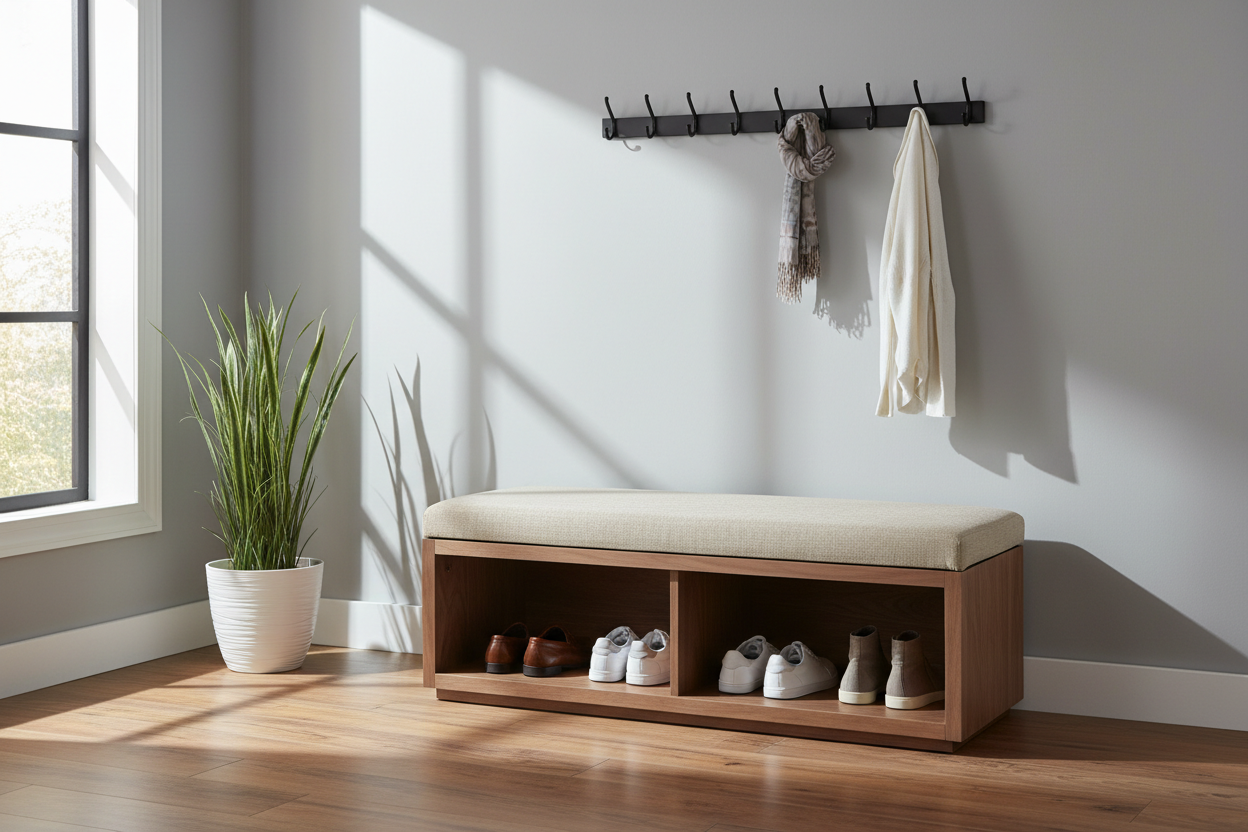
The foyer is the handshake of the home. It sets the tone for everything that follows, yet it is often the most neglected space regarding functionality. We have all experienced the frustration of tripping over scattered footwear or hopping on one foot while trying to lace up a boot. The solution is not just storage; it is a dedicated seating anchor. An **entryway shoe stool** is more than a convenience—it is a critical piece of infrastructure for a well-organized home.
Key Features to Look For
- Ergonomic Height: Aim for a seat height between 18 to 20 inches for comfortable shoe removal.
- Material Durability: Prioritize hardwoods or metal frames over particle board for high-traffic longevity.
- Depth Constraints: Ensure the unit is shallow enough (typically 12-15 inches) to not obstruct the walkway.
- Storage Capacity: Verify the shelf height accommodates your specific footwear, such as high-top sneakers or ankle boots.
Choosing the Right Material for Longevity
As a designer, I constantly remind clients that the entryway sees the most abuse. Between wet umbrellas, muddy soles, and dropped keys, your furniture must be resilient. A wood entryway shoe bench is often the gold standard, but the type of wood matters immensely.
Solid Wood vs. Veneer
While a wooden hallway shoe storage bench made of veneer might look sleek in a showroom, it rarely survives the humidity and impact of a busy family foyer. I recommend looking for kiln-dried hardwoods like maple, oak, or walnut. These materials withstand temperature fluctuations near the door without warping. If you prefer an upholstered hallway shoe bench with seat, opt for performance fabrics like Crypton or high-grade leather that can be wiped down easily.
Space Planning and Ergonomics
The most common error I see in floor plans is ignoring the "swing" and the "flow." An entry door shoe bench must allow for a minimum of 36 inches of clearance for the walkway. If your hallway is narrow, you need a piece with a slender silhouette that doesn't sacrifice stability.
Visual Weight and Balance
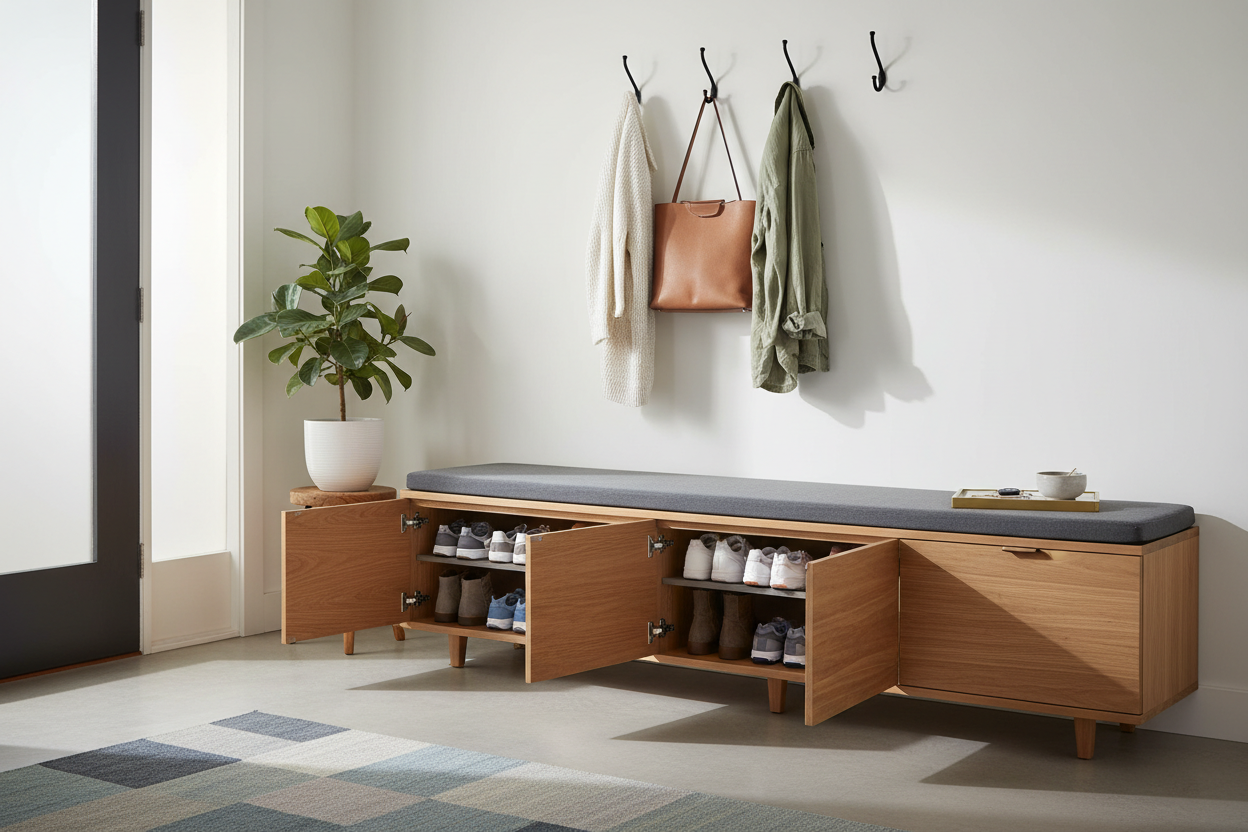
In a small foyer, a solid, boxy bench for shoes in hallway can feel heavy and suffocating. To maintain an airy atmosphere, look for a design with legs that lift the storage off the floor. This negative space creates an illusion of a larger room. Conversely, in a grand foyer with high ceilings, a grounded, substantial foyer bench with shoe rack acts as a necessary focal point to anchor the space.
My Personal Take on Entryway Shoe Stools
I learned a hard lesson early in my career regarding open vs. closed storage on these stools. I once specified a beautiful, open-shelf teak bench for a client who lived in the Pacific Northwest. While the piece was stunning, I failed to account for the visual noise of their actual lives.
Within a month, that elegant bench looked chaotic because it was stuffed with brightly colored running shoes and muddy gardening clogs. It ruined the serene entry vibe we aimed for. Since then, unless a client is exceptionally tidy, I almost always lean toward units with a drop-front door or baskets that slide into the cubbies. It hides the visual clutter. Also, a small detail often overlooked: check the glides on the bottom. I’ve seen cheap plastic glides scratch expensive hardwood floors the moment someone sits down to tie their shoes. Always add felt pads immediately.
Conclusion
Selecting the right seating for your entrance is about balancing architectural constraints with daily habits. When you choose a piece that respects your square footage and withstands your lifestyle, you create a greeting space that feels composed and welcoming every time you walk through the door.
Frequently Asked Questions
What is the ideal depth for a narrow hallway bench?
For tight spaces, look for a depth of 12 to 14 inches. This provides just enough surface area to sit perching without encroaching on the circulation path.
Can I use a shoe stool if I have radiant floor heating?
Yes, but ensure the bench has legs rather than a solid base. This allows heat to circulate properly and prevents the heat from drying out and cracking solid wood components over time.
How much weight should a quality entryway bench support?
A high-quality bench should support at least 250-300 lbs. This accounts for the dynamic force of a person sitting down quickly or two people sitting simultaneously.


Leave a comment
This site is protected by hCaptcha and the hCaptcha Privacy Policy and Terms of Service apply.