










Most homes suffer from the same architectural awkwardness: long, dark corridors and entryways that serve no purpose other than transit. We treat these spaces as flyover country within our own walls, hurrying through them to get to the "real" rooms. But adding storage to these transitional zones is one of the smartest design moves you can make. A well-placed bookcase in entryway areas or corridors doesn't just store your library; it adds immediate character, breaks up the tunnel effect, and creates a functional drop zone for daily life.
The key to making this work isn't just shoving a standard piece of furniture against the wall. It requires understanding traffic flow and visual weight. If you have at least 36 inches of walking clearance remaining after placement, you have enough room for a library. Whether you are looking for a statement piece for the foyer or a stealthy storage solution for a tight corridor, the goal is to maximize vertical space without encroaching on the floor plan.
Mastering the Narrow Hallway Challenge
Corridors are notoriously difficult to furnish. Standard furniture depth usually hovers around 12 to 16 inches, which can choke the flow of traffic in a standard corridor. To reclaim this space, you need to hunt specifically for a narrow hallway bookcase. The magic number here is usually 10 inches or less in depth. This shallow profile allows you to store paperbacks, trade manuals, and decor items without snagging your sweater as you walk past.
When shopping for a thin bookcase for hallway applications, pay close attention to the baseboard. Many standard units sit flush against the wall only if you remove the molding, which is a hassle. Look for units with cutouts at the back or legs that clear the skirting board. If you can't find a narrow hallway bookshelf that fits your specific dimensions, wall-mounted floating shelves are a fantastic alternative. They keep the floor visible, which tricks the eye into thinking the hallway is wider than it actually is.
For those dealing with truly tight squeezes, consider turning books face-out on picture ledges. This effectively turns your book collection into a rotating art gallery and only requires about three inches of depth. It is a brilliant solution for a small hallway bookcase setup where traditional shelving is impossible.
Making an Entrance: The Foyer Library
Your front door sets the tone for the entire house. Introducing a foyer bookcase instantly signals that this is a home that values comfort and knowledge. Unlike the corridor, entryways often have a bit more square footage, allowing for deeper units. However, the function here is different. Entryway bookshelves often need to double as command centers.
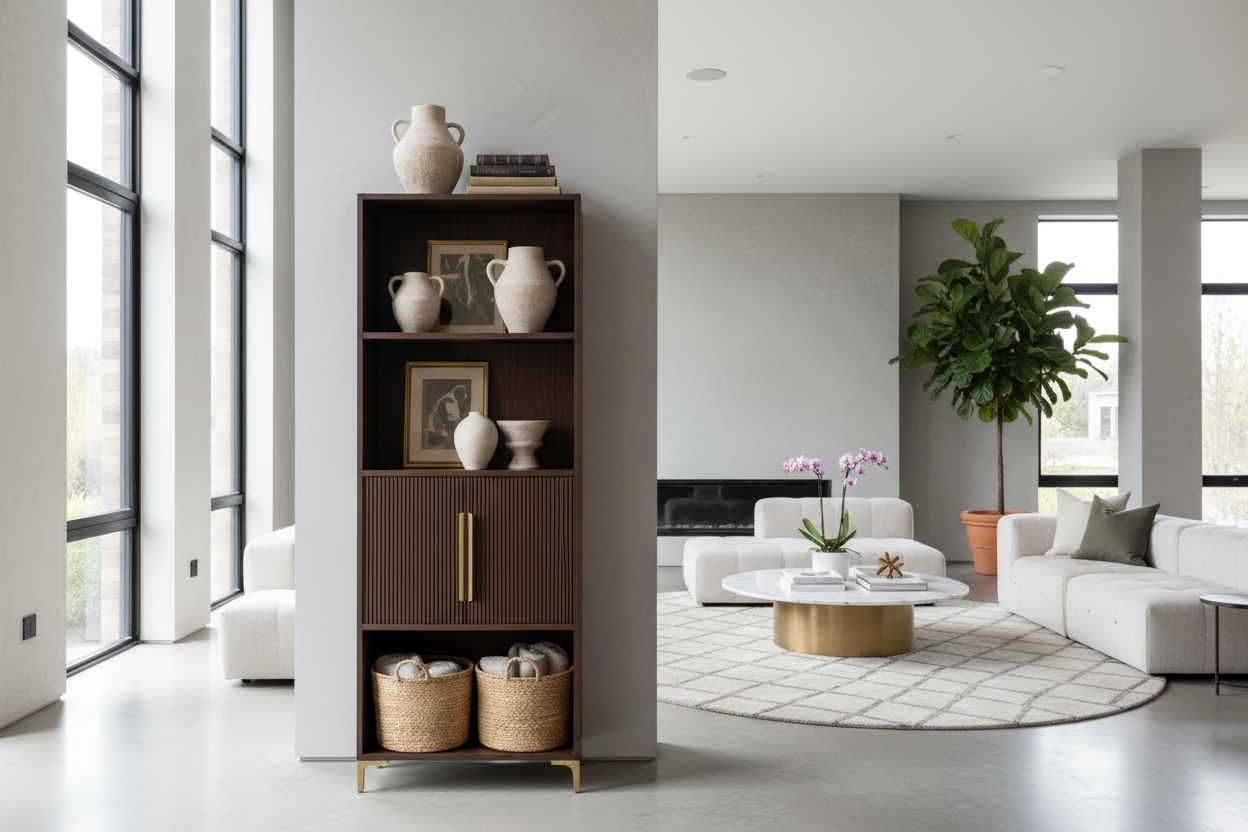
Consider the "hybrid" approach. Use the upper shelves for your hardcover collection and styling objects, but reserve the waist-high and lower shelves for utility. Baskets placed on the bottom shelves can hide shoes, dog leashes, or winter gear. A bowl on a middle shelf catches keys and mail. When looking for entryway bookshelf ideas, prioritize pieces that offer a mix of open shelving and perhaps a drawer or cabinet door at the bottom to conceal the inevitable clutter that accumulates at the front door.
Lighting is also critical here. If your bookcase in entryway areas doesn't have built-in lighting, place a small lamp on a shelf (if there's an outlet) or install battery-operated puck lights under the shelves. This creates a warm, welcoming glow when you arrive home in the evening, rather than the harsh overhead light typically found in foyers.
A Personal Project: The "Impossible" Hallway
I once worked on a hallway that felt more like a chute than a part of a home. It was barely 38 inches wide, leading to a back bedroom. The owner desperately wanted storage but was convinced nothing would fit. We couldn't find a commercial narrow hall bookcase that didn't feel bulky. The solution ended up being a custom hack using standard pine boards and simple metal brackets.
We built a floor-to-ceiling unit that was only 7 inches deep—just enough for mass-market paperbacks and small artifacts. By painting the shelves the same dark moody blue as the walls, the unit seemed to recede into the architecture rather than sticking out. It transformed a claustrophobic passage into a cozy, intentional library. It taught me that physical depth matters less than visual integration. If you paint a hall bookcase to match the wall, it visually disappears, leaving only the books on display.
The "End of the Tunnel" Strategy
If your hallway is too narrow for side furniture, look to the dead end. An end of hallway bookshelf is a powerful focal point. It draws the eye down the length of the corridor, making the ceiling feel higher and the space more deliberate. This is the perfect spot for a built-in look.
You can achieve this by finding a freestanding unit that fits snugly between the side walls, or by installing simple shelving spanning the entire width. Because this bookshelf faces you as you walk, it doesn't impede traffic flow, meaning you can use deeper shelves here. This is a great place to store larger art books or bins that wouldn't fit in a shallow side unit.
Styling Tips for High-Traffic Zones
Bookcases in hallways face more vibration and movement than those in a quiet study. Stability is non-negotiable. You must anchor any tall furniture to the wall to prevent tipping, especially in narrow areas where bumps are likely.
When it comes to aesthetics, hallway bookshelf ideas should lean toward minimalism. A cluttered shelf in a narrow space feels oppressive. Leave negative space (empty spots) on the shelves to let the eye rest. Group books by color or size to reduce visual noise. If you are implementing entryway bookcase ideas, try to keep the "active" items (keys, sunglasses) contained in trays or bowls so the shelves don't look messy.
Don't be afraid to mix materials. A metal and wood unit can feel lighter and airier than a solid wood piece. Glass shelves are another excellent trick for small spaces, as they allow light to pass through, keeping the hallway feeling open. Whether you choose a modern metal grid or a classic wooden case, the addition of vertical storage changes the acoustics of a hallway, dampening echoes and making the home feel quieter and warmer.
FAQ
How deep should a hallway bookcase be?
For most residential corridors, a depth of 10 to 12 inches is ideal to maintain comfortable walking clearance. If your hallway is particularly tight, look for media towers or shelving specifically designed for DVDs or paperbacks, which can be as shallow as 6 to 8 inches.
How do I style a bookshelf in a busy entryway without it looking messy?
Utilize the lower third of the bookcase for concealed storage using matching baskets or bins for shoes and bags. Keep the upper shelves reserved for books and decorative objects, and use trays to corral small loose items like keys and mail on accessible middle shelves.
Can I put a bookcase in a dark hallway?
Yes, but you should pair it with lighting to prevent the space from feeling cave-like. Use brighter paint colors for the shelving unit itself, or add battery-operated LED strip lights or puck lights to the underside of the shelves to illuminate the books and open up the space.


Leave a comment
This site is protected by hCaptcha and the hCaptcha Privacy Policy and Terms of Service apply.