










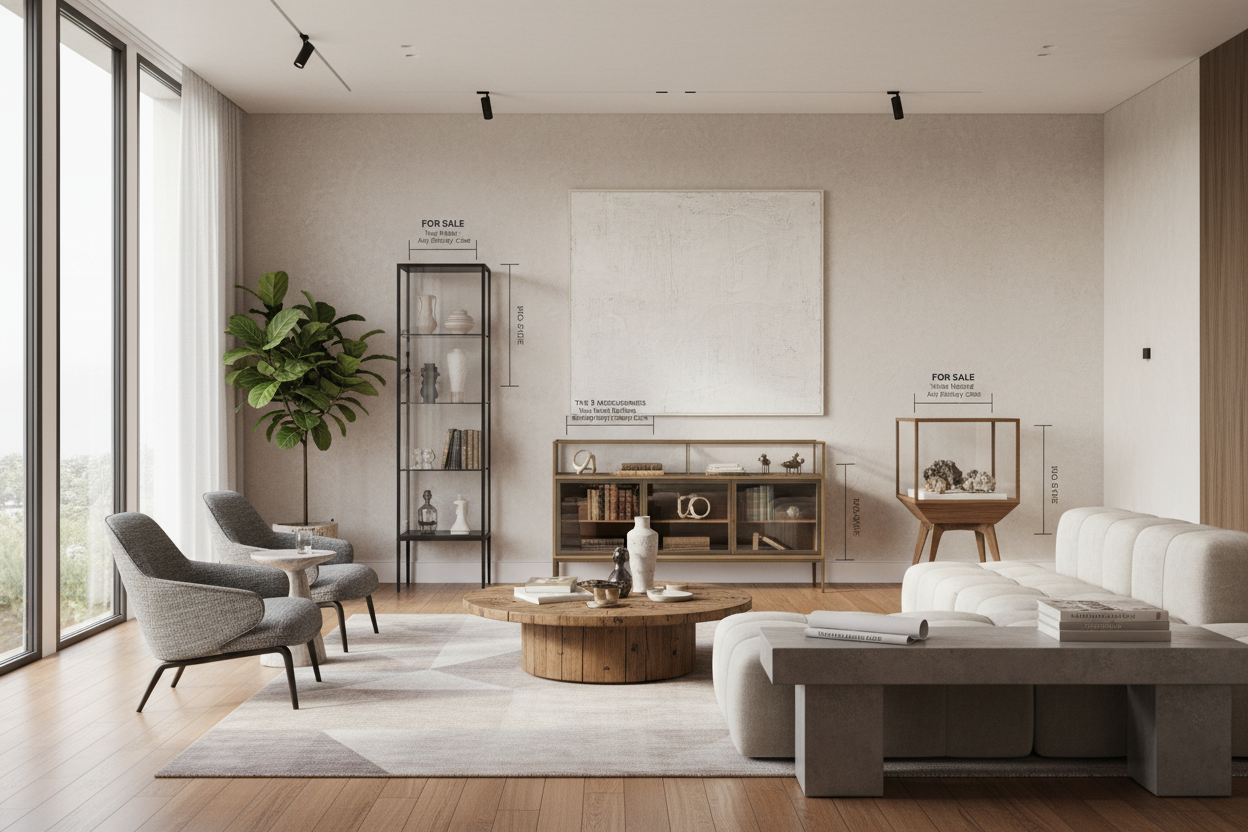
I have spent far too many Tuesday nights staring at forty-seven open browser tabs, convinced that a specific for sale display case will finally solve my clutter problem. We’ve all been there: you find a piece that looks stunning in the professional studio photos, but when it arrives, it either swallows your living room whole or makes your prized vase collection look like it’s being crushed in a trash compactor.
Buying furniture online is a gamble, but buying glass furniture is a high-stakes sport. If you are hunting through various display cases on sale, you need more than just a rough idea of where the cabinet will sit. You need a tape measure and a dose of reality.
- Door Swing: Ensure you have at least 18-24 inches of clearance in front of the unit.
- Internal Height: Measure your tallest item and add 2 inches for breathing room.
- Ceiling Gap: Leave at least 6 inches above the cabinet to avoid a 'cramped' look.
- Weight Capacity: Glass shelves usually max out at 15-20 lbs; check before loading up the heavy stoneware.
The 'Aisle Clearance' Rule (It's Not Just About Wall Space)
The biggest mistake I see people make is measuring the wall but forgetting the floor. A display case might only be 15 inches deep, but if it has swinging glass doors, you suddenly need 30 inches of space just to get inside it. If that cabinet is sitting in a hallway or a narrow living room, you’ve just created a permanent traffic jam.
I once bought a gorgeous mahogany unit for my entryway only to realize I couldn't open the door fully without hitting the coat rack. It was a nightmare. If your walkway is tight, stop looking at wide rectangular units and consider a Corner Display Case. Pivoting to a corner model keeps your floor plan open while still giving you that vertical storage you're after.
Shelf Height vs. Your Actual Collection
Nothing kills the vibe of a new piece of furniture faster than realizing your favorite tall decanter is exactly half an inch too tall for the fixed shelves. Most budget cabinets use fixed shelving to save on manufacturing costs, which is why you have to be obsessive about internal dimensions. Don't trust the external height; look for the 'shelf clearance' in the specs.
If you have a mix of tall art books and shorter trinkets, you need something with a bit more vertical ambition. I usually point people toward the 62 2 H Tall China Curio Cabinet White Display Case With Glass Doors because it offers enough height to accommodate those awkwardly shaped decor items that usually end up hidden in a kitchen cupboard. Always measure your tallest item first, then add two inches of 'air' so the shelf doesn't look suffocated.
The 'Visual Weight' Check (And Why Lighting Changes Everything)
A massive, dark wood cabinet can feel like a black hole in a small room, even if it technically fits the measurements. This is what designers call 'visual weight.' If you have low ceilings, a 72-inch cabinet is going to make the room feel like it’s closing in on you. You want at least a foot of space between the top of the cabinet and the ceiling to let the room breathe.
Lighting is the secret weapon here. A dark cabinet in a dim corner looks like a looming box. I’m a huge fan of built-in illumination to break up that heaviness. An option like the 4 Layer Glass Door Display Case With Led Light changes the entire dynamic. The light draws the eye into the cabinet rather than letting the cabinet dominate the room's perimeter. It makes the piece feel intentional and airy, rather than just another bulky storage unit.
What to Watch Out For Before Clicking 'Add to Cart'
Before you commit, do a final sanity check on the materials. Tempered glass is a non-negotiable for me—I've seen cheap non-tempered glass shatter from a simple temperature change, and it isn't pretty. Also, look at the base. If the cabinet is top-heavy and doesn't come with a wall-anchoring kit, keep moving. Safety isn't sexy, but neither is a tipped-over cabinet.
I’ve learned the hard way that a low price tag often hides flimsy shelving brackets or wobbly frames. If you want to avoid a total assembly disaster, take a minute to read up on The Red Flags I Look For When Browsing Display Cases for Sale. It’ll save you the headache of a return shipment, which, trust me, is ten times harder with glass than it is with a rug or a pillow.
How much weight can a glass shelf actually hold?
Most standard tempered glass shelves in home display cases are rated for 15 to 25 pounds. If you’re planning on displaying a heavy collection of cast iron or thick hardbound books, you’ll want to look for reinforced brackets or thicker 8mm glass.
Do I really need to anchor a display case to the wall?
Yes. Always. Especially if you have kids, pets, or live in an area prone to tremors. Glass cabinets are naturally top-heavy once loaded, and the doors add extra weight when swung open. Most quality units include an anti-tip kit—use it.
What is the best height for a display case in a living room?
For most standard 8-foot ceilings, a cabinet between 60 and 70 inches is the sweet spot. It’s tall enough to feel substantial but leaves enough 'white space' above it so the room doesn't feel cramped or cluttered.


Leave a comment
This site is protected by hCaptcha and the hCaptcha Privacy Policy and Terms of Service apply.