










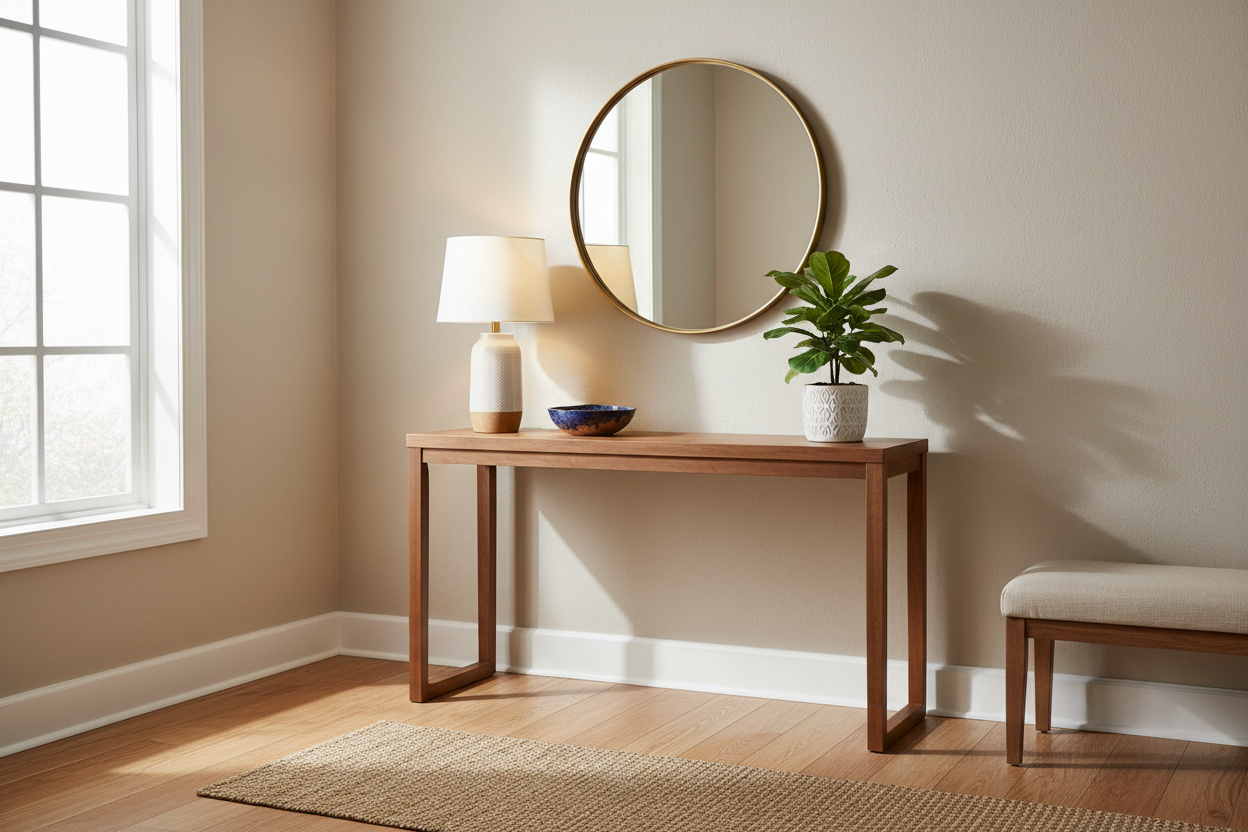
The entryway sets the emotional tone for your entire home. It is the transition zone between the chaos of the outside world and your personal sanctuary. A wood entry table serves as the grounding force in this space, offering more than just a surface to drop your mail. It provides immediate warmth, texture, and a focal point that glass or metal alternatives often lack. Whether you have a sprawling foyer or a tight corridor, timber offers a resilience and aesthetic appeal that makes a house feel lived-in and welcoming from the moment the door opens.
Choosing the right piece requires balancing functionality with the architectural reality of your space. You need a surface that can handle the daily abuse of keys and bags while maintaining its visual charm. Solid timber or high-quality veneers are particularly forgiving, hiding dust better than glass and developing a rich patina over time that tells the story of your home.
Finding the Right Fit for Your Space
I recall moving into a rowhouse years ago that had a notoriously dark, narrow corridor. I initially made the mistake of buying a sleek, industrial metal table because I thought it would look "modern." It was a disaster. It clattered loudly every time I set my keys down, and the cold material made the hallway feel sterile. I eventually swapped it for a reclaimed oak console. The difference was immediate. The grain of the wood absorbed the light differently, making the shadows feel cozy rather than gloomy, and the solid surface dampened the sound of daily life. That experience taught me that the material you choose for high-traffic areas matters just as much as the dimensions.
When shopping for a wooden entrance table, the scale is your primary constraint. In a standard foyer, you have the luxury of depth. You can look for pieces that are 15 to 18 inches deep, allowing for substantial decor like large lamps or sculptures. However, if you are furnishing a tighter wood hallway, you need to look for "slimline" or "narrow" profiles, usually between 10 and 12 inches deep. This ensures you can walk past with grocery bags without hip-checking the furniture.
Functionality Meets Form: Storage Solutions
A flat surface is great, but a wood entry table with storage is often a necessity for maintaining sanity. Clutter accumulates rapidly near the front door. If you are prone to leaving piles of mail, dog leashes, or loose change on the counter, look for a table with drawers. The goal is to keep the visual noise low. A table with two or three shallow drawers allows you to hide the mess while keeping essentials accessible.
For those who need their furniture to pull double duty, a wood console desk is a brilliant hybrid option. These pieces are slightly deeper and often have a finished back, allowing them to serve as a workspace during the day and a decorative entry piece at night. This is particularly effective in open-plan apartments where the "entryway" might bleed directly into the living room. You can tuck a stool underneath when it's not in use, maintaining the look of a console while keeping the utility of a desk.
The Versatility of Timber Console Tables
The type of wood you select dictates the vibe of the entrance. Light woods like ash, maple, or white oak tend to feel Scandi-modern or coastal. They keep the space feeling airy, which is helpful in smaller homes. On the other hand, dark woods like walnut or mahogany lean towards traditional or mid-century modern aesthetics. They add gravity and elegance but can visually shrink a small area if the lighting isn't adequate.
Reclaimed timber console tables are excellent for high-traffic zones because they come pre-distressed. If you accidentally scratch it with a zipper or a heavy box, it just blends into the existing character of the piece. This makes them ideal for families with kids or pets where pristine furniture is a recipe for stress.
Styling Your Wood Hallway Table
Once the table is in place, the styling brings it to life. A wood hall console table acts as a stage. Since wood is an organic, light-absorbing material, you want to contrast it with reflective or smooth textures. A large mirror hung above the table is a classic move for a reason: it bounces light around the hall and allows for a last-minute outfit check.
Lighting is equally critical. If space permits, a table lamp adds a soft glow that overhead lights can't replicate. For narrower hall tables wood surfaces, where a lamp base might take up too much room, consider installing wall sconces on either side of the mirror or artwork. This frees up the tabletop for a catch-all tray or a vase of greenery.
Don't overcrowd the surface. The rule of three works well here: a vertical element (like a lamp or tall vase), a horizontal element (like a stack of books or a tray), and a sculptural element (like a bowl or artifact). Leave some negative space so the beauty of the wood grain remains visible.
Maintenance and Longevity
Wood is durable, but it isn't invincible. The entryway sees moisture from wet umbrellas and heat from radiators. To protect your investment, ensure the wood is sealed properly. If you have a raw wood table, apply a clear matte polyurethane or a quality wax. Use coasters for drinks and avoid placing the table directly against a high-heat radiator, which can cause timber to warp or crack over time.
Regular dusting with a microfiber cloth keeps the finish looking fresh. Avoid harsh chemical cleaners that can strip the oil or varnish. A simple solution of water and a drop of dish soap is usually enough for cleaning up mud splatters or sticky fingerprints.
Frequently Asked Questions
How tall should an entry table be?
Most console tables range between 30 and 36 inches in height. Ideally, the table should be level with the back of a sofa or just slightly below your hip. This height makes it comfortable to drop keys without bending down while keeping the surface visually balanced with the rest of the room.
Can I mix different wood tones in the hallway?
Yes, mixing wood tones creates a layered, curated look. The trick is to keep the undertones consistent. If your floor has warm, red undertones, a table with similar warm notes (even if it's lighter or darker) will look harmonious. Avoid mixing cool, gray-toned woods with rich, reddish woods unless you bridge them with a rug.
What is the difference between a console table and a sofa table?
Functionally, they are often the same piece of furniture used in different spots. A console table is placed against a wall, typically in an entryway, while a sofa table goes behind a couch. However, sofa tables are sometimes slightly lower to match the sofa frame, while entry tables can be taller to stand alone as a focal point.

Leave a comment
This site is protected by hCaptcha and the hCaptcha Privacy Policy and Terms of Service apply.