










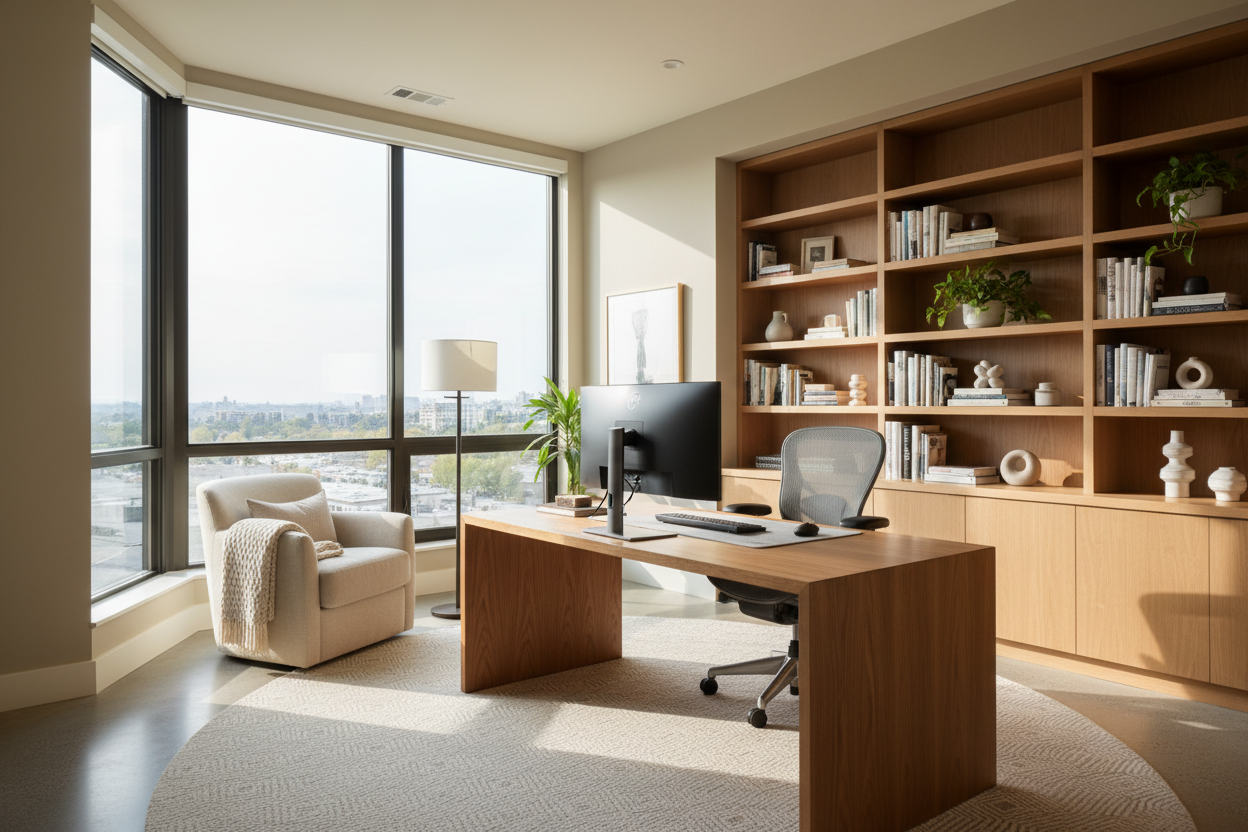
For years, the corporate world dictated the aesthetic of our productivity: greige cubicles, industrial carpet, and harsh fluorescent lighting. As an interior designer, I have seen a massive shift in how clients view their living spaces. The transition isn't just about logistics; it is about reclaiming your environment. The true benefits of working from home go far beyond eliminating the commute—they are rooted in the ability to curate a space that supports your physical health and creative mental state.
Key Features for a High-Performance Home Office
- Ergonomic Customization: Unlike standard office furniture, home setups allow for chairs and desks tailored to your specific height and posture needs.
- Lighting Control: The ability to layer ambient, task, and natural lighting to reduce eye strain and improve mood.
- Acoustic Management: Using rugs, drapery, and soft furnishings to dampen sound and create a focused quiet zone.
- Visual Psychology: Selecting color palettes and textures that stimulate focus rather than inducing stress.
The Ergonomic Advantage: Investing in Your Body
One of the most significant pros of working from home is the liberation from "one-size-fits-all" office furniture. In a corporate setting, you get the chair you are given. At home, the work from home advantage is purely anatomical. When I consult on home offices, we prioritize the "sit-stand" dynamic.
Choosing a desk isn't just about surface area; it is about the silhouette and mechanism. High-quality solid wood standing desks offer stability that prevents monitor shake—a subtle annoyance that causes fatigue over time. Furthermore, the benefits to working at home include the option to use active seating, such as saddle seats or balance chairs, which engage your core but are rarely seen in traditional offices.
Curating Visual Balance and Mental Clarity
The home office pros extend deeply into psychology. A major benefit of wfh is the control over your visual field. In design terms, we look at "focal points." In a cubicle, your focal point might be a fabric wall. At home, you can position your desk to face a window or a piece of art.
Materiality and Texture
To truly maximize the advantages of working at home, move away from melamine and laminate. Incorporate organic materials. A walnut desk with a live edge or a chair upholstered in breathable linen adds a tactile dimension to your workday. This textural interplay reduces stress. The benefits of online jobs are best realized when the physical environment contrasts with the digital screen; warm wood grains and soft textiles ground you in reality.
Lighting: The Underrated Productivity Booster
Perhaps the best thing about working from home is escaping the flicker of fluorescent tubes. Lighting design is critical. Ideally, you want to layer your lighting. Start with natural light (position your screen perpendicular to windows to avoid glare), add general overhead lighting, and finish with a warm task lamp.
The perks of working from home include the ability to adjust color temperature. I recommend smart bulbs that mimic the circadian rhythm—cooler, blue-enriched light in the morning for alertness, transitioning to warmer, amber tones in the late afternoon. This is a work from home benefit that directly impacts your sleep cycle and long-term well-being.
Space Planning for the "Work from Anywhere" Lifestyle
The work from anywhere benefits imply flexibility, but structure is still required. Even in small apartments, defining a zone is crucial. We call this "zoning." Using an area rug to visually anchor the desk creates a psychological boundary between "living" and "working." The advantage work from home offers is the ability to blend this zone seamlessly with your home's decor, rather than having a jarring piece of metal furniture in your living room.
My Personal Take on Benefits of Working From Home
I learned the hard way that the pros of working from home only exist if you respect the furniture's function. When I first transitioned my studio to a home setting, I bought a stunning, vintage mid-century modern chair. It had a low back and looked incredible in photos. It was a "luxury look" choice.
After three weeks, my lower back was in agony, and the vintage velvet started showing distinct wear patterns from where my elbows rested while typing. I realized that is working from home worth it often depends on prioritizing function over pure aesthetics. I swapped it for a high-end ergonomic mesh chair but threw a sheepskin throw over it to soften the industrial look. The lesson? The benefit to work from home is the ability to hack the system—combining commercial-grade ergonomics with residential coziness. Don't let the showroom look deceive you; if it doesn't support your lumbar, it doesn't belong in your office.
Conclusion
Ultimately, the benefits of work from home for employees are not just about saving time; they are about elevating the quality of that time. By investing in proper ergonomics, thoughtful lighting, and materials that bring you joy, you transform a job into a lifestyle. Your workspace should not just be a place where you produce; it should be a place where you thrive.
Frequently Asked Questions
What are the advantages of work from home regarding furniture durability?
In a home environment, furniture typically sees less aggressive wear and tear than in shared commercial spaces. However, because you are the sole user, static load (sitting in the same spot) can wear down foam density faster. The work from home job benefits include the ability to maintain and clean your furniture more frequently, extending its lifespan.
Is working from home worth it if I have a small space?
Absolutely. The work from home benefits in small spaces rely on verticality. Utilizing wall-mounted shelving and floating desks can maximize floor space. The advantage of working from home here is forcing a clutter-free, minimalist discipline that often leads to higher productivity.
How do I balance style with the benefits of work from home jobs?
Focus on "resimercial" design—furniture that looks residential but functions like commercial gear. Look for task chairs wrapped in high-performance fabrics rather than standard black mesh, and desks that utilize furniture-grade wood finishes.

Leave a comment
This site is protected by hCaptcha and the hCaptcha Privacy Policy and Terms of Service apply.