










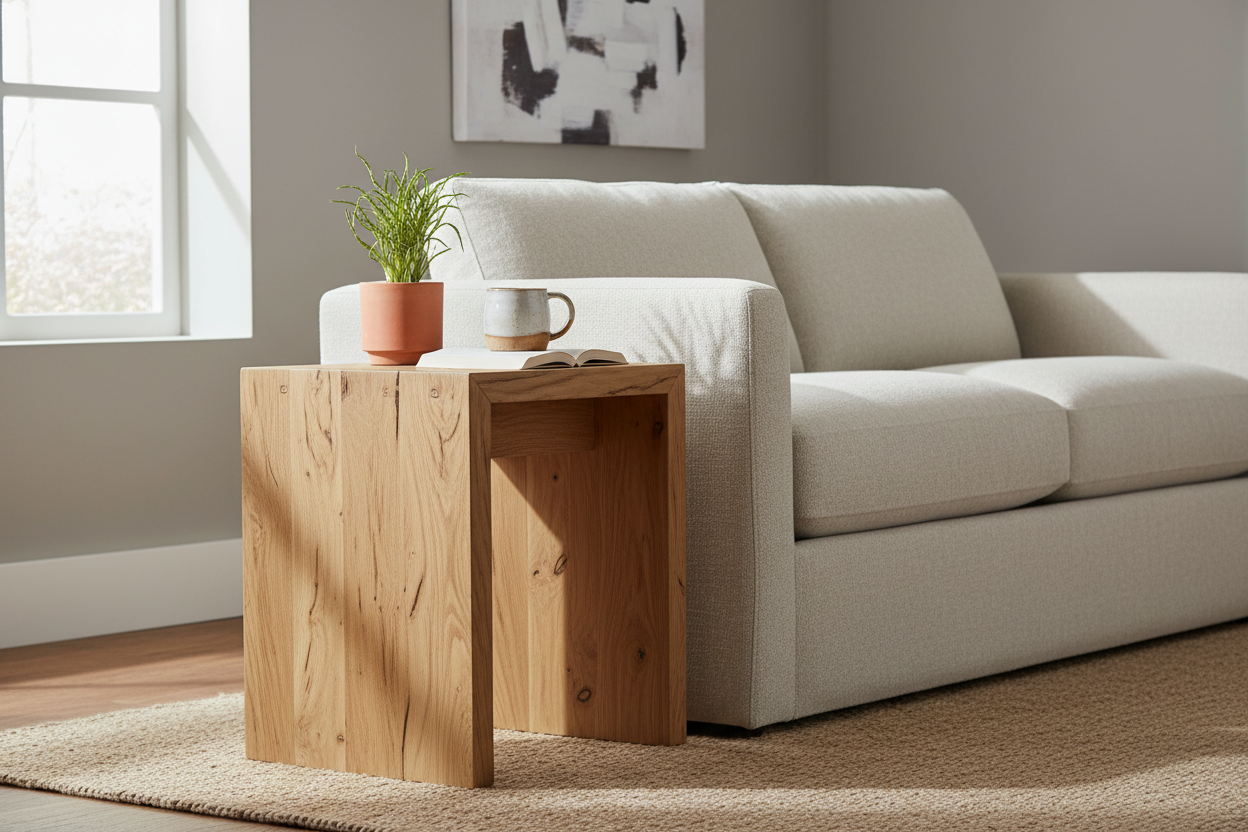
There is a distinct grounding effect that comes from introducing organic materials into a living space. While trends in acrylic, glass, and industrial metal come and go, wooden side tables remain a constant anchor in interior design. They bridge the gap between pure utility and aesthetic warmth, offering a place to set a coffee mug while simultaneously softening the hard lines of modern architecture. Finding the right piece involves more than just picking a color; it requires understanding grain patterns, durability, and how the table interacts with the rest of your furniture.
I learned this lesson the hard way a few years ago. I fell in love with a sleek, high-gloss laminate piece that looked perfect in the showroom. Within six months, the edges were peeling, and it felt cold and impersonal next to my linen sofa. I eventually swapped it out for a vintage solid oak piece I found at an estate sale. The difference was immediate. The room felt warmer, the clunk of a book hitting the surface felt substantial, and the scratches it has acquired over time only add to its story. That experience shifted my perspective entirely: furniture should age with you, not just exist beside you.
The Enduring Appeal of Natural Materials
Wood has a unique ability to adapt to almost any design language. Whether your home leans towards mid-century modern, farmhouse, or Scandinavian minimalism, wood side tables for living room arrangements act as chameleons. They don't just fill space; they add texture. The tactile experience of running your hand across a raw walnut edge or a smooth, lacquered maple surface connects you to the natural world in a way that synthetic materials simply cannot replicate.
When selecting wooden living room end tables, consider the tone of the wood relative to your flooring. You do not need to match them perfectly. In fact, a slight contrast usually looks more curated. If you have dark hardwood floors, a lighter oak or bleached mango wood table creates a necessary visual break, preventing the room from feeling too heavy or cave-like.
Sizing and Placement: The Ergonomics of Comfort
A beautiful table is useless if it is awkward to use. The height of your sofa side table wooden selection is the most critical metric. Ideally, the table surface should sit at or just below the arm height of your sofa. This allows you to reach for a drink without straining your shoulder or bending awkwardly. If the table is too high, it feels imposing; too low, and it becomes a tripping hazard.
For those with deep, plush seating, a standard square table might not reach far enough. In these scenarios, a wood couch side table with a C-shape design can be a game-changer. These tables slide under the frame of the sofa, bringing the surface area directly over your lap. This is particularly useful for small apartments where floor space is at a premium, or for anyone who uses their living room as a makeshift home office.
Mixing Materials for Visual Interest
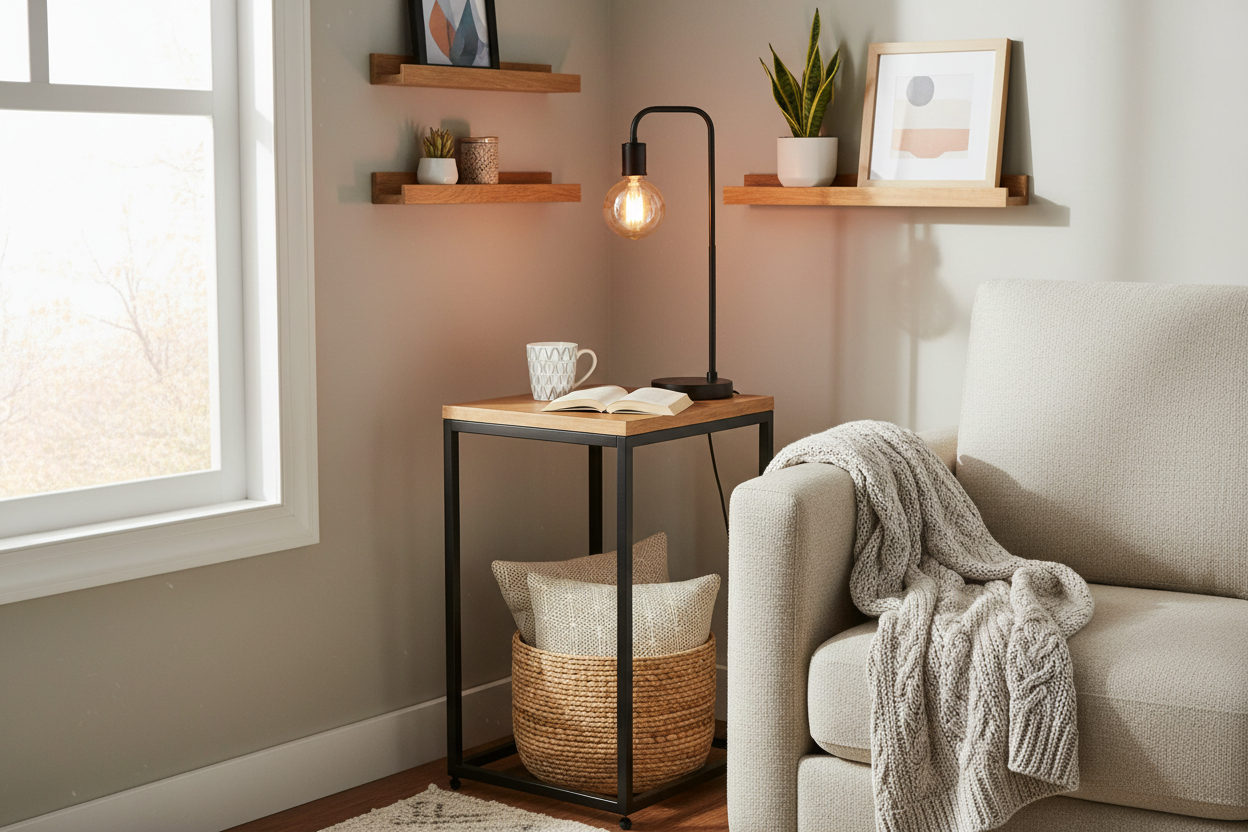
You don't have to commit to a piece that is 100% lumber. Wood top end tables with metal bases are an excellent way to introduce wood tones without adding too much visual bulk. The metal legs—whether matte black iron or brushed brass—provide a slender silhouette that keeps the room feeling airy, while the wooden top delivers that essential warmth. This combination works exceptionally well in industrial or contemporary lofts where a full-block wood table might look too rustic.
Styling Your Surface
Once you have the furniture in place, the challenge shifts to decoration. A wood side table living room setup tends to look best when it isn't cluttered. The rule of three is a reliable guideline here: a lamp for height, a stack of books for width, and a small decorative object (like a ceramic bowl or a plant) to bridge the gap. Because wood has a complex grain, you want to avoid covering the entire surface.
Lighting plays a huge role here. The warm glow of a table lamp reflecting off a polished wood side table for couch styling creates an inviting ambiance in the evening. If your table has a lower shelf, use it for items you need but don't want on display, such as remote controls or magazines, keeping the top surface pristine for your beverage and lamp.
The Niche Appeal of the Chairside Table
Sometimes you aren't flanking a large sofa. Perhaps you have a solitary reading armchair in a corner. A wood chairside table is specifically designed for this vignette. These tables are often narrower than standard end tables, designed to slot into tight corners or sit unobtrusively beside a recliner. Despite their smaller footprint, they need to be heavy enough to remain stable when bumped.
Solid wood options are superior here because lighter composite materials can easily tip over in high-traffic areas. A heavy wood sofa end table or chairside companion anchors the spot, defining the area as a dedicated zone for relaxation. Look for rounded edges if the table sits in a walkway to save your shins from painful collisions.
Durability and Maintenance
Real wood is durable, but it is not invincible. Water rings are the enemy of any wood accent tables for living room designs. If you opt for an oil-finished table, you will need to re-oil it once or twice a year to keep the wood nourished and water-resistant. Lacquered or polyurethane-coated tables offer more protection against spills but can be harder to repair if deeply scratched.
Coasters are non-negotiable. However, if you do get a watermark, many solid wood surfaces can be sanded down and refinished, which is the true beauty of buying quality materials. Unlike veneer, which can chip and reveal cheap particle board underneath, solid wood allows for multiple lives. This longevity makes a wood accent table a sustainable choice compared to disposable flat-pack furniture.
Final Thoughts on Selection
Choosing the right furniture is about balancing your lifestyle with your aesthetic goals. If you have young children or pets, a rugged, distressed wood sofa end table might be better than a pristine, high-gloss walnut piece that shows every fingerprint. Think about how you actually live in your room. Do you eat dinner there? do you work there? Let those functional needs drive your decision, and the style will naturally follow.
Frequently Asked Questions
Should my side tables match my coffee table?
No, they do not need to match. In fact, having a coffee table and side tables that are identical can make a room look like a furniture showroom. Instead, try to coordinate them by style or material weight, or choose woods with similar undertones (like warm vs. cool) to create a cohesive but interesting look.
How tall should a side table be compared to the sofa?
The general rule of thumb is that the side table should be within two inches of the sofa's arm height. Ideally, it should be level with or slightly lower than the arm. If the table is significantly higher than the arm, it can feel awkward to reach up to set down a drink.
What is the difference between an end table and a side table?
The terms are often used interchangeably, but generally, end tables are designed to sit at the end of a sofa or sectional and usually have a larger surface area for lamps. Side tables can be more versatile, often smaller, and can be placed beside solo chairs or moved around the room as needed.


Leave a comment
This site is protected by hCaptcha and the hCaptcha Privacy Policy and Terms of Service apply.